Wing Foiling in Waves — Tips for Surf Conditions
Wing foiling in waves isn't flat-water wing foiling. You're reading swell, managing variable wind across moving faces, and keeping your foil locked in turbulent water. We've shipped wings to Hossegor, Tenerife, and Cape Town for five years — here's what works.
Target 12–22 knots wind, 2–4 foot waves, and a 4–6 m² wing (pick size by wind, not ego). Board volume scales inversely with wind: 100–120 L in light days, 80–100 L when it fills. Your foil front wing should sit 1400–1600 cm² for clean wave transitions. Start with a Duotone Unit or Cabrinha Mantis.
01 — Wave selectionTiming and Swell — Reading Wave Conditions for Wing Foiling
Wave wing foiling works best with defined swell lines and clean faces — think rolling A-frames, not dumping shorebreak. You want organized texture so you can read the face and time your lift. Beach breaks work. Reef breaks work. Shorebreak that closes out in three seconds? You'll spend more time swimming than flying.
Wind direction matters more in waves than flat water. Offshore wind holds the face up and keeps your wing stable. Onshore wind flattens the swell and makes the wing twitchy. We've noticed riders from Tarifa to Cape Town struggle most when wind's competing with the swell direction — your wing wants to angle one way, the wave wants to drag you another.
Size your swell to your skill. Two-foot waves with defined peaks are safer than four-footers with chaotic lips. You're learning to pump the foil and manage the wing — don't add a dumping shorebreak to that equation.
02 — Gear sizingChoosing Your Wing and Board Size for Waves
Pick your wing size by the wind forecast, not by how big your shoulders are. In 12–16 knots, you want 5–6 m². In 16–20 knots, drop to 4–5 m². Above 20 knots, go 3.5–4.5 m². The wing needs to be small enough that you can control it when a wave face accelerates you, but big enough to generate lift in lulls.
Board volume is the opposite game. Light wind days (12–16 knots) need more float — 100–120 L keeps you buoyant when the swell flattens between sets. Windier days (18–22 knots) let you shrink to 80–100 L because the wing does more work. Don't bring a 140 L board to a 20-knot day — you'll overshoot every wave and spend your session upwind of the peak.
Front wing area should land in the 1400–1600 cm² range for wave riding. Bigger wings (1800+ cm²) stall too easily on vertical sections. Smaller wings (1200 cm²) are race gear — they'll make you work harder to stay in the wave.
03 — Our picksOur 4 in-Stock Picks
We've got the Duotone Unit range and Cabrinha Mantis line stocked now. Pick by wind range and budget — both brands are what our shop riders reach for when the swell lines up.


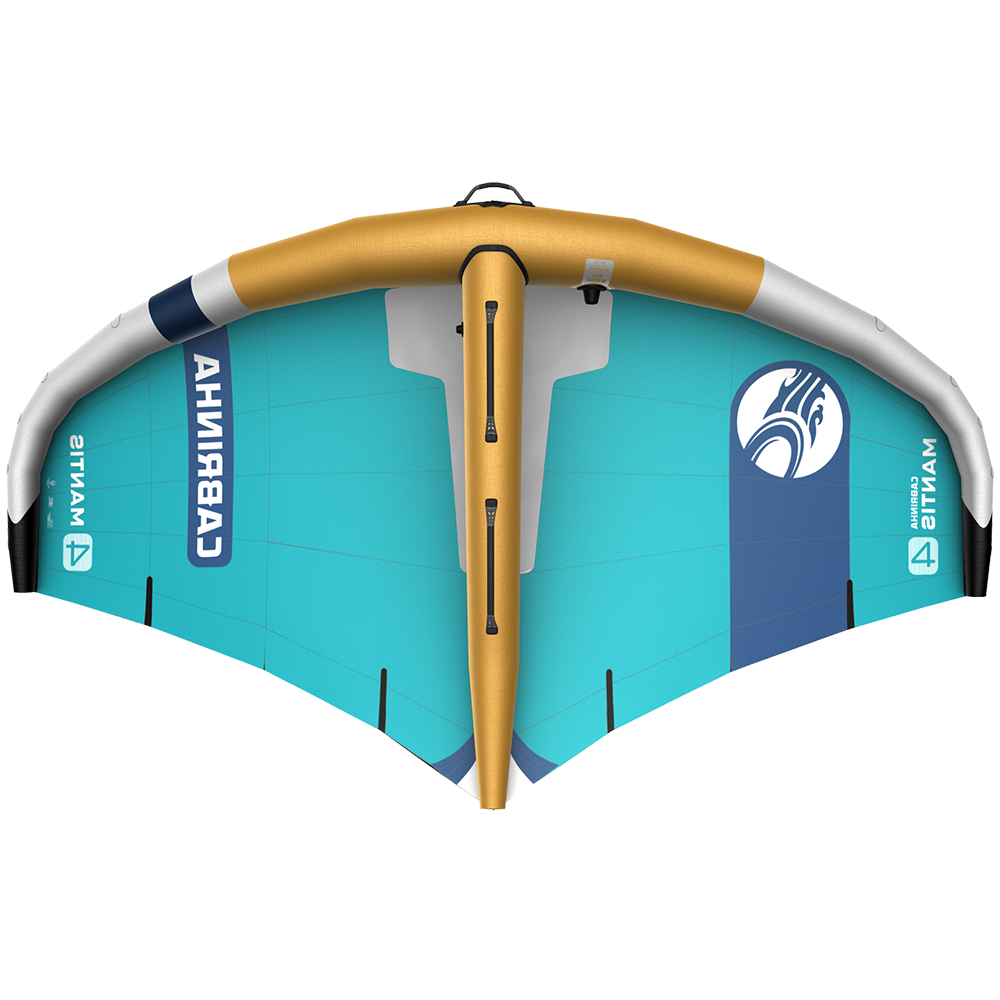
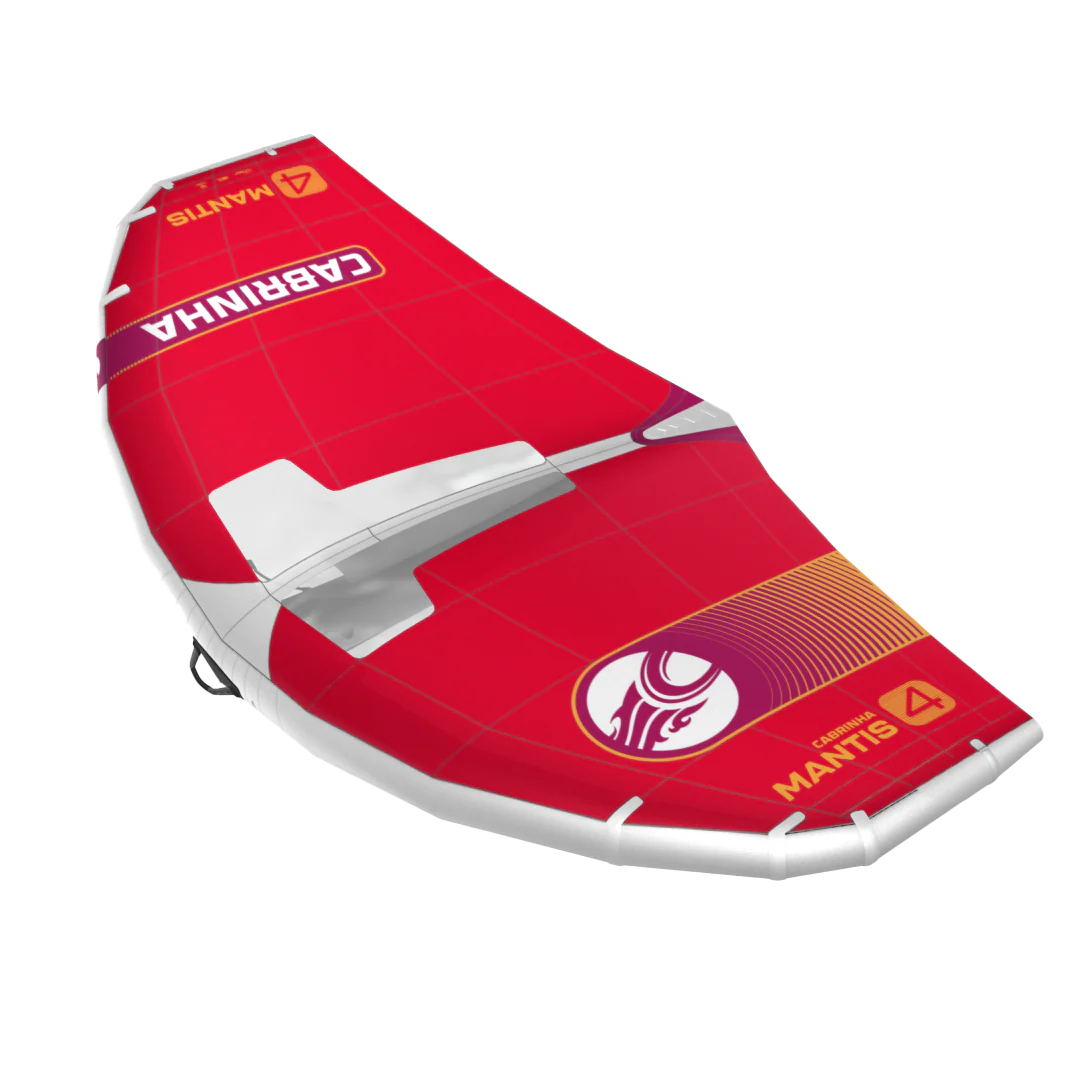
Prices and 2026 specs are pulled live from each product page. Confirm on the product page before checkout.
04 — MistakesThree mistakes we see every week
Ready to wing in waves?
Browse our wing foil range — you'll find Duotone and Cabrinha wings, boards, and foils all in one place.
Frequently asked
3.5 m² minimum for solid wind days (18+ knots). Below that you're working too hard. If you're looking at 2.5–3 m², you're in light-wind race mode, not wave riding.
You can, but it's not ideal. Flat-water boards are often higher volume. A 100 L wave board is more playful on swell. Start with one board in the 90–110 L range and dial it in.
Two-foot faces (waist-to-shoulder high) are enough to learn. You don't need barreling waves — just organized, rolling lines. Anything less than 18 inches and you're chasing wash.
Both work. The Unit SLS is lighter and snappier in gusty wind. The Mantis has more range and forgiveness. If you're new to waves, the standard Mantis is simpler. If you want precision, go Unit.