Windsurf Harness Settings for Strong Wind — Expert Guide
When the wind jumps to 25+ knots, your harness settings become your lifeline. We'll walk you through line placement, hook angle, and spreader bar tension—the three moves that separate a controlled session from a frustrating wipeout.
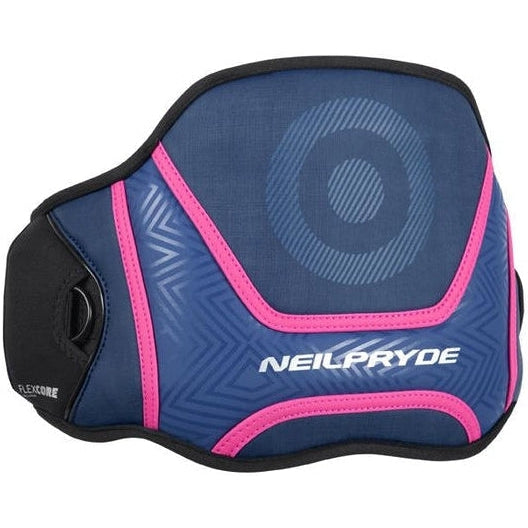
In strong wind, shift your harness lines forward by 2–5 cm as gusts pick up, keep your hook angle at 90 degrees (neutral), and dial your spreader bar tension snug—firm enough to brace your core, loose enough to breathe. The Neilpryde EVO Harness (Men and Women) gives you the adjustability you need when conditions go sideways.
01 — PositioningFinding Your Sweet Spot: Line Placement
Line placement is where your power management starts. In 20–25 knots, your boom naturally wants to rotate forward under load. If your lines sit too far back, that rotation amplifies—your board nose lifts, you lose leverage, and control vanishes.
Move your lines forward 2–5 cm as wind strengthens. This shifts your pressure point closer to your boom's sweet spot, keeping the board flat and the rig responsive. You'll feel the difference immediately: less arm strain, cleaner carves, and your board stays locked in.
Start with a neutral baseline (boom middle) and adjust in 1 cm increments on land before you launch. In 30+ knots, you'll often be 5 cm or more forward of your summer position.
02 — EngagementHook Angle and Spreader Bar Tension
Your hook angle (the angle between your hook and the boom) controls how the line loads your body. In strong wind, keep it neutral—90 degrees. This distributes force evenly across your hips and lowers back, the strongest part of your frame.
Too acute (less than 90°) and you're pushing power into your lower back—recipe for injury. Too open (more than 90°) and the load shifts to your shoulders and arms, killing your ability to relax.
Spreader bar tension should be snug enough that the bar doesn't collapse inward when you're hooked in under load, but not so tight it restricts your breathing or core rotation. You want stability, not a straitjacket.
03 — Our picksOur 4 In-Stock Harness Picks
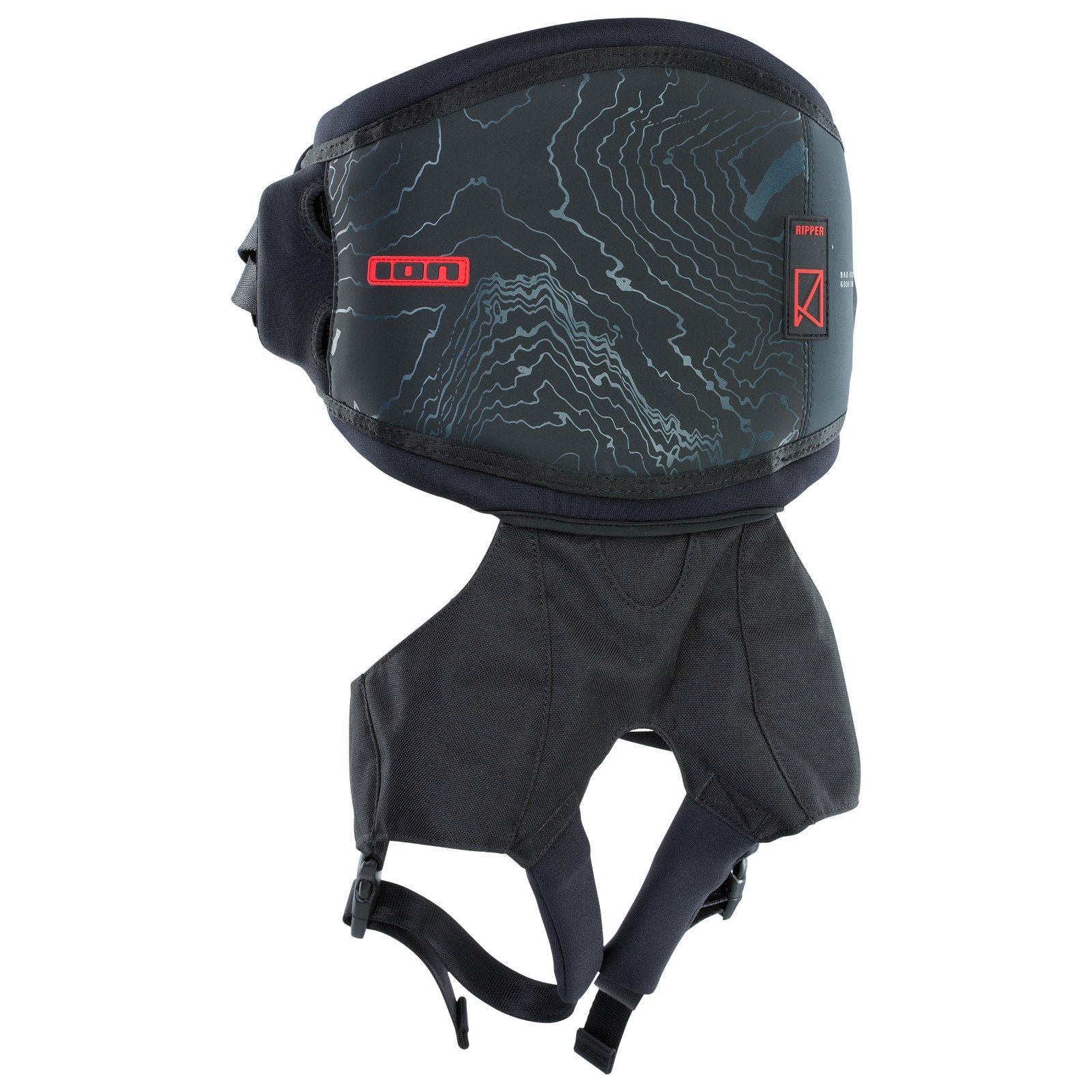
We've tested these harnesses in everything from light lake days to 35-knot Atlantic blasts. Each one handles strong-wind adjustment differently—pick based on your weight, riding style, and whether you prefer waist or seat.
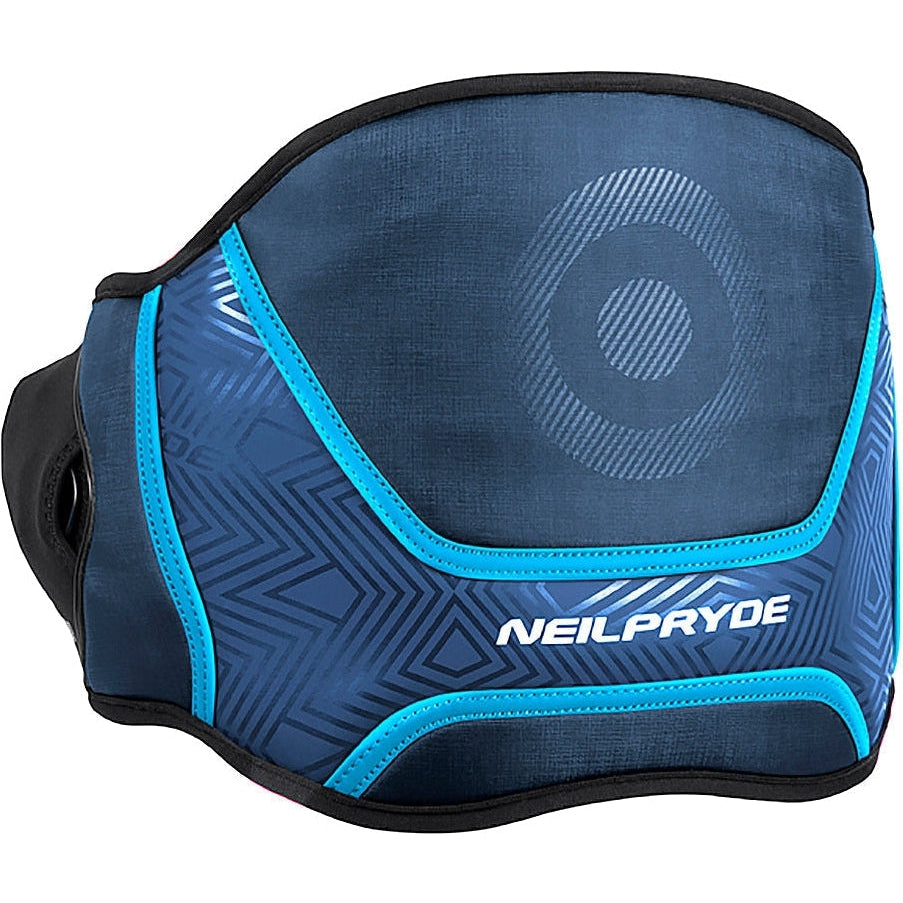
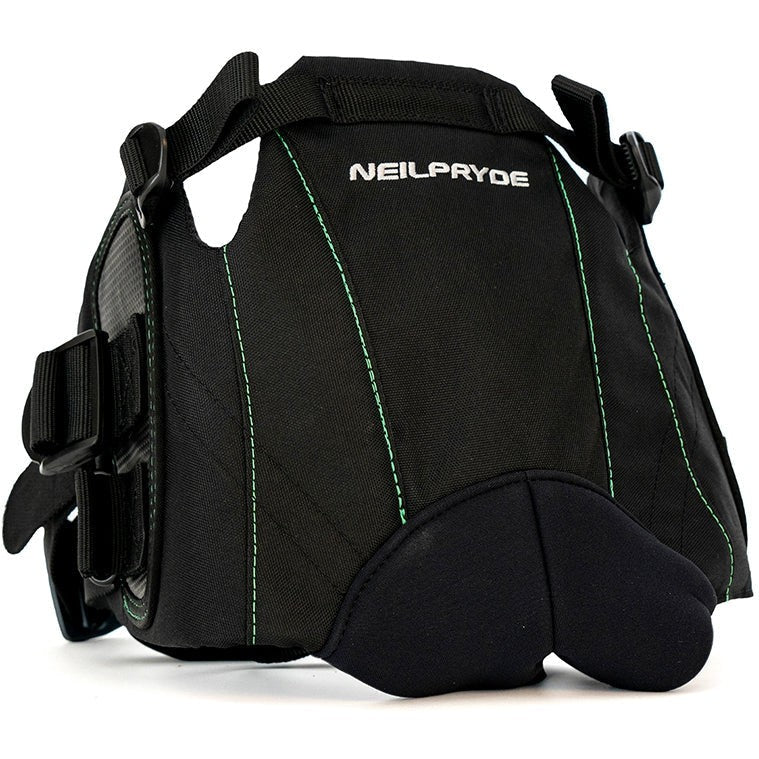
Prices and 2026 specs are pulled live from each product page. Confirm on the product page before checkout.
04 — MistakesThree mistakes we see every week
Ready to dial in your strong-wind setup?
Browse our full harness range and find the fit, comfort, and adjustability that works for your conditions.
Frequently asked
Start with 2–3 cm forward of your light-wind baseline and adjust in 1 cm steps until the rig feels balanced. In 30+ knots, many riders are 5 cm or more forward.
No. Light wind (8–15 knots) and strong wind (25+ knots) demand different line placement and hook tension. Use your harness adjustability—that's what it's for.
Waist harnesses (like the Neilpryde EVO) let you move freely and feel the board better. Seat harnesses distribute load over a larger area and suit heavier riders or those with back sensitivity. Both work in strong wind if dialed correctly.
Your spreader bar tension is too loose, or the bar itself is worn. Increase tension slightly (snug, not tight) and check that your bar sits perpendicular to your boom and hook.