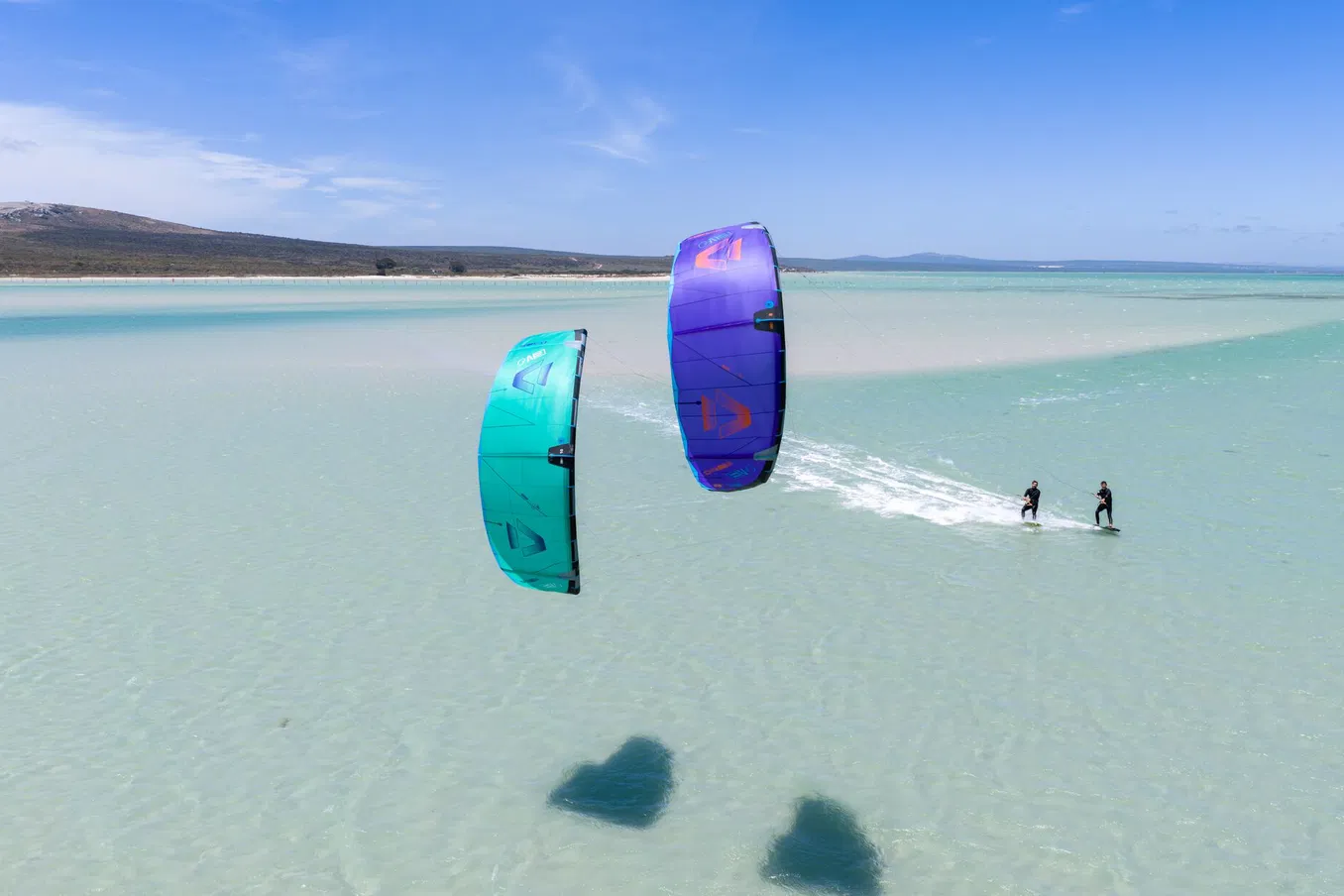
What Is Foil Kiting? — Hydrofoil Kitesurfing Explained
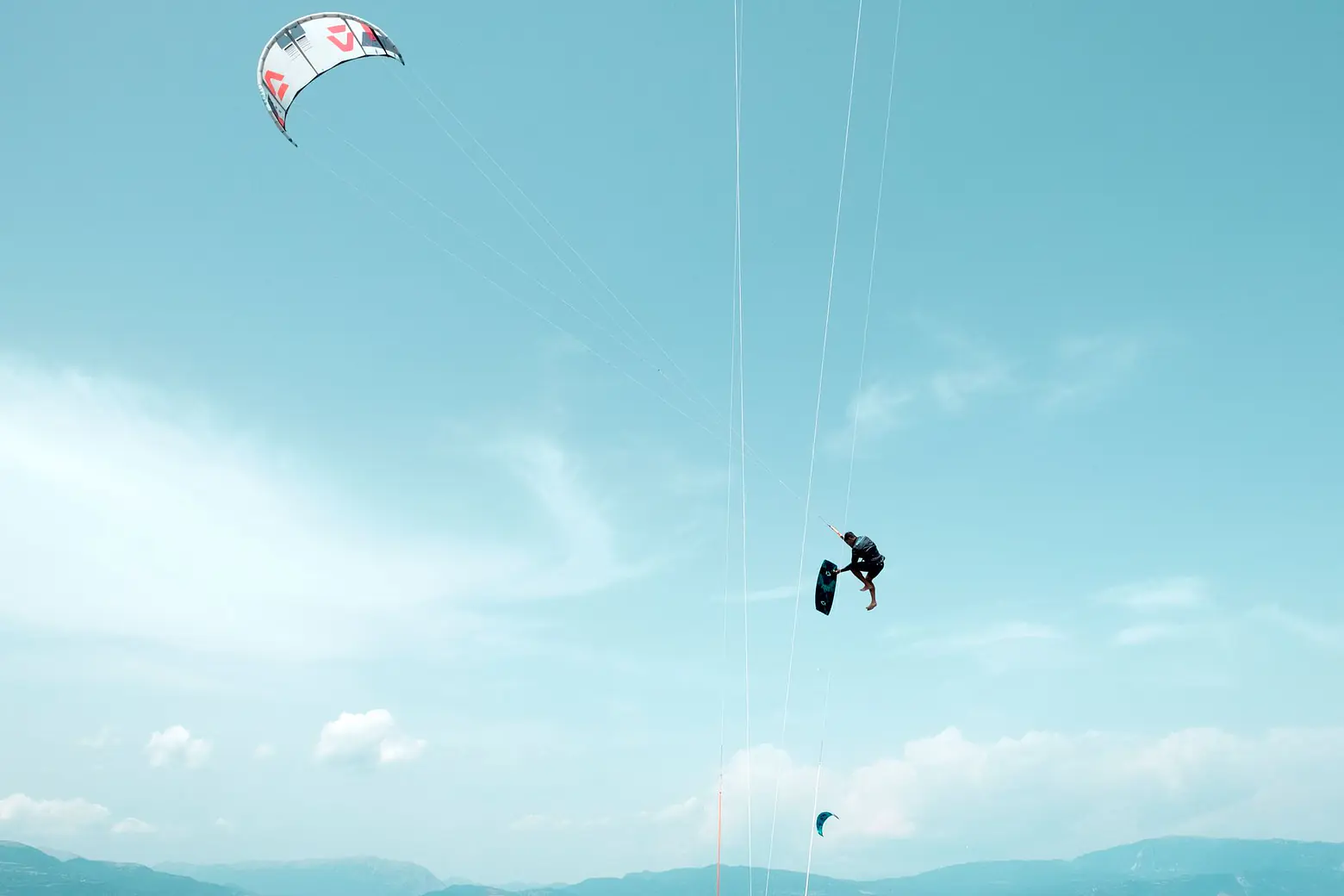
Foil kiting lifts you 2–4 feet above the water on a hydrofoil—a submerged wing that kills drag and lets you ride in half the wind. It's not hype. It changes everything.
Foil kiting uses a hydrofoil (submerged wing) to lift you above the water, cutting drag and letting you ride in 8–10 knots instead of 12–15. You'll feel weightless, faster, and smoother. Kites like the Duotone Evo SLS 2026 pair perfectly with foil boards because they deliver precise bar feel—exactly what foiling demands.
01 — PhysicsHow Does a Hydrofoil Actually Work?
A hydrofoil is an aircraft wing bolted underwater. Your board sits on a short mast connected to two wings (a fuselage) below deck. As the kite pulls you forward and you build speed, water flows over those wings, creating lift—exactly like an aeroplane wing in air.
Once you're airborne, there's almost zero drag. You're not ploughing through chop or friction anymore. That's why you need so much less wind. Riders who normally need 13 knots to get going can foil comfortably at 9.
02 — Riding feelWhy Foil Kiting Changes Everything
Once you're up on the foil, the water disappears. You're floating. There's no bumping, no spray in your face, no constant adjustment for chop. The sensation is closer to surfing a perfect glass wave than anything you'll feel on a regular twin-tip.
Foiling also works in lighter wind. We've had customers in the North Sea and Mediterranean tell us they've gone from sitting on the beach 60% of the year to actually riding 70% of the time. That alone sells it.
03 — Our picksOur 4 In-Stock Foil-Ready Kites
All four Duotone SLS kites from 2026 handle foiling beautifully because they're precise, responsive, and stable in the turns you'll need. Pick by wind range and your weight—not by price.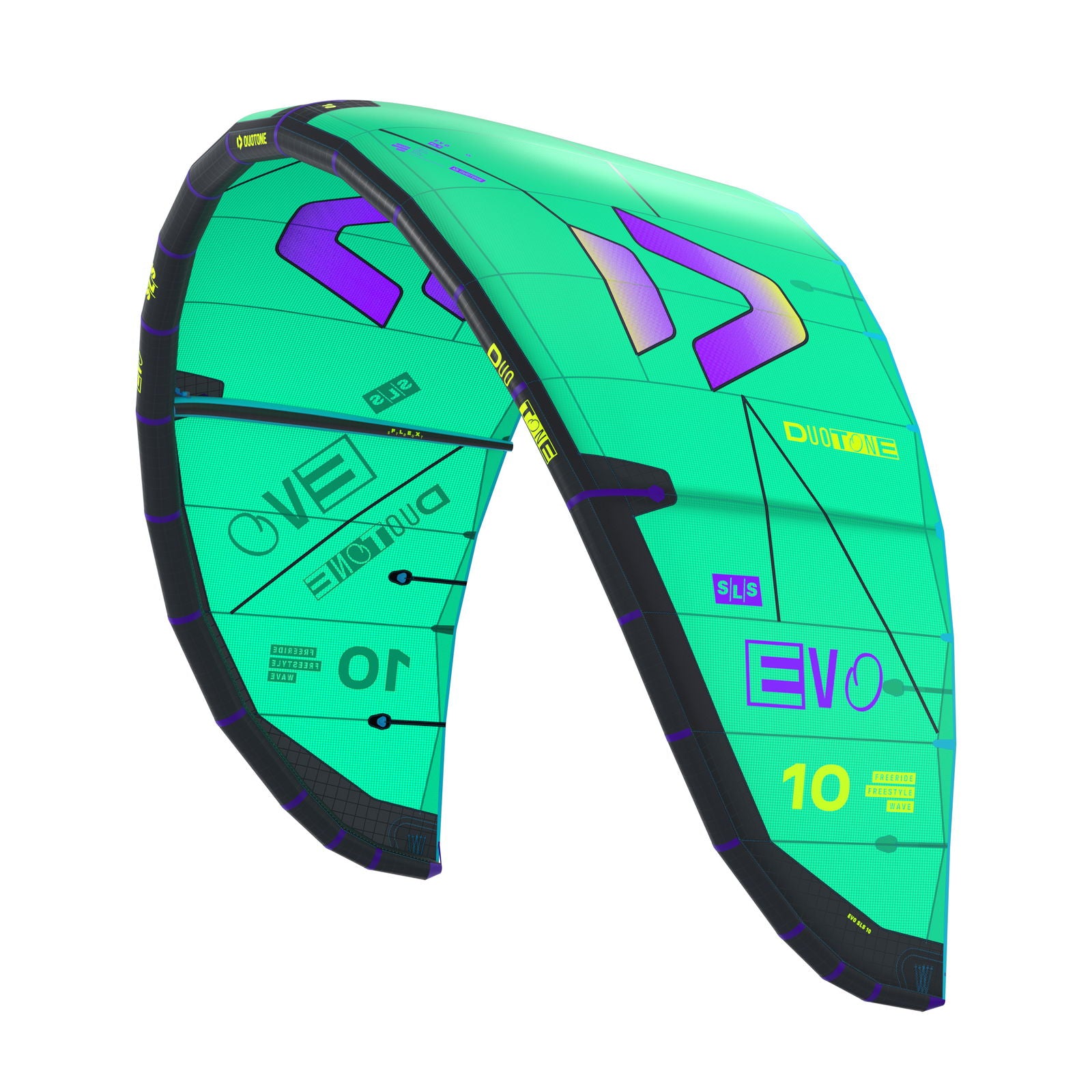
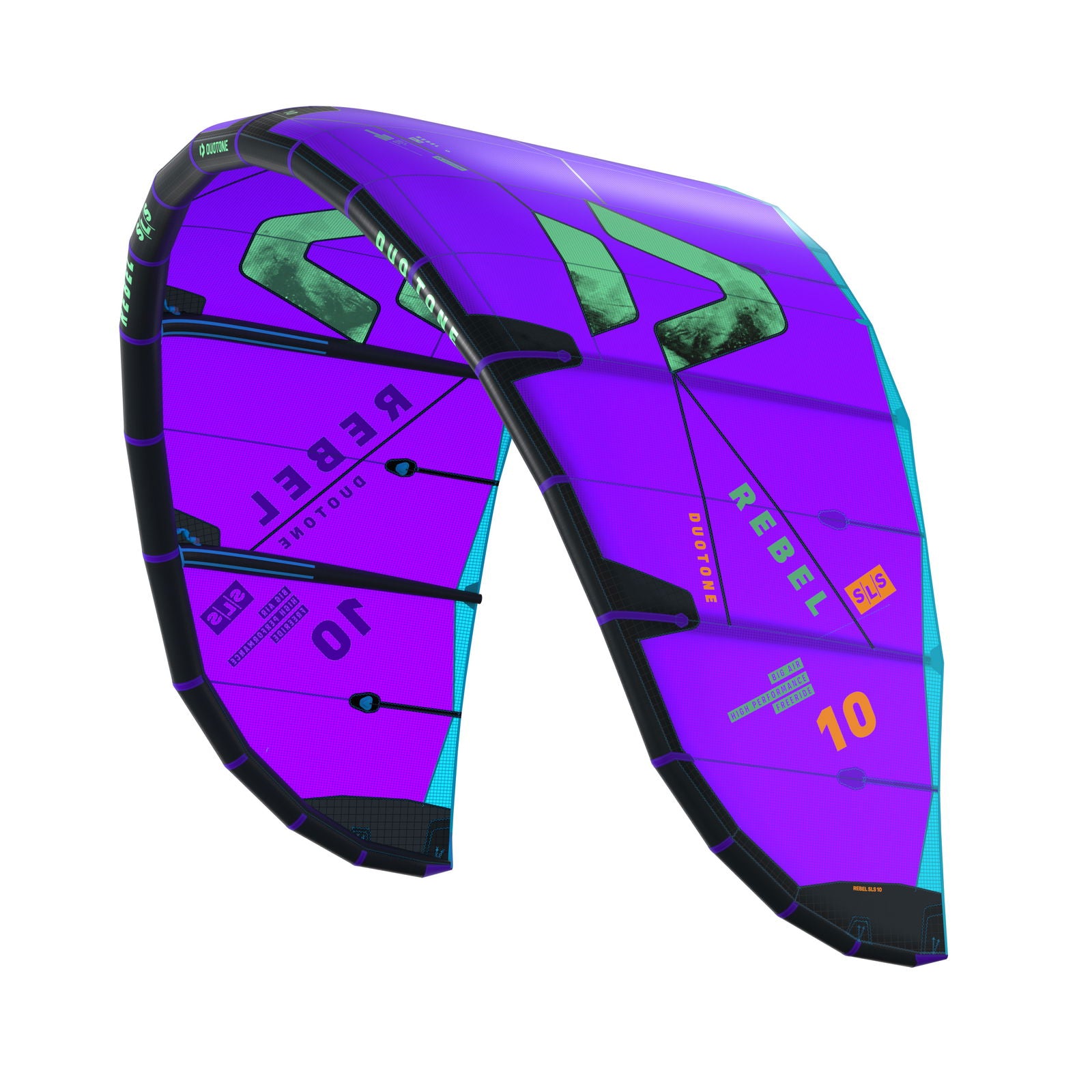
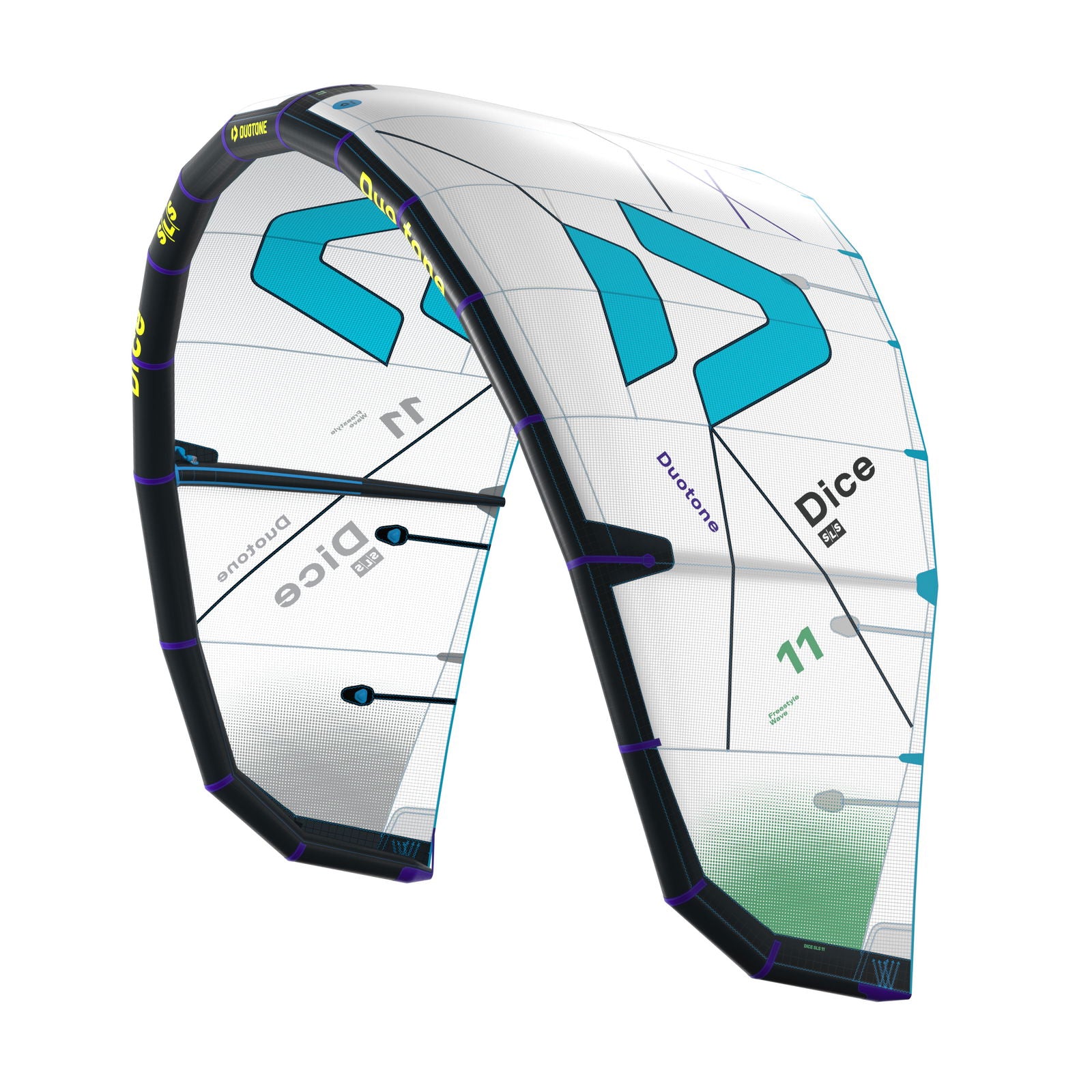
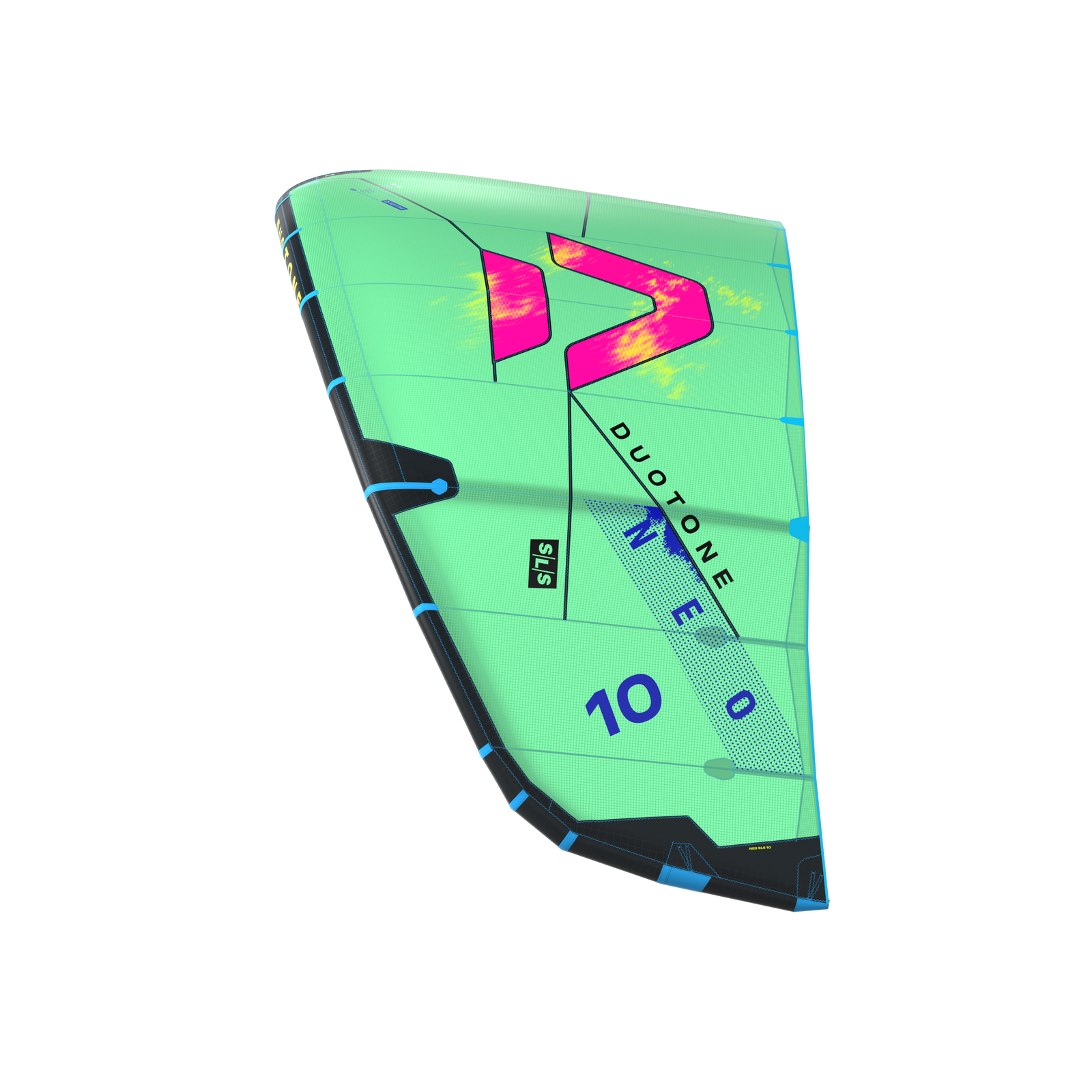
Prices and 2026 specs are pulled live from each product page. Confirm on the product page before checkout.
04 — MistakesThree mistakes we see every week
Ready to foil?
Check our full range of kites and find the size and model that matches your wind and style.
Frequently asked
Most riders foil in 8–15 knots. With the right kite size (9–12 m²) you can go lower. Above 20 knots, foiling gets harder because the board feels twitchy. Stick to 8–18 knots for the smoothest sessions.
It's different, not harder. If you can heel-side pop on a twin-tip, you can foil. Expect 5–10 sessions to feel stable, 20–30 to feel smooth. The learning curve is real but rewarding.
Not necessarily, but older kites won't give you the precision foiling demands. A Duotone Neo SLS 2026 or Dice SLS 2026 is a good entry point—light on the wallet, sharp on bar feel.
Start with 9 m² in 12–15 knots. Once you're solid, grab a 12 m² for lighter days. Skip 7 m²—it's too specialist. Most foilers carry a 9 and 12 m² quiver.