How to Choose a Windsurf Board 2026 — Buyer's Guide
Pick the wrong windsurf board and you'll either sink or spend the day fighting a plank that won't turn. Volume, width, rocker, and construction matter — here's exactly what to look for in 2026.
Start with volume (140–200 L for beginners), match it to board width (60–70 cm for stability), check the construction (D/LAB epoxy cores last longer), assess rocker (flat for light wind, curved for waves), and ride your local conditions first. The JP Magic Wave S-TEC 2026 ticks all boxes for riders stepping into freestyle and wave work.
01 — SizingVolume and Flotation — The Non-Negotiable Start
Your volume is everything. Too small and you'll sink the moment you lean back. Too large and the board becomes a plank you can't control. Beginners need 140–200 L. If you weigh 70–80 kg, aim for 155–165 L to stay afloat in light wind and give yourself room to progress without fighting buoyancy.
Check the product page for exact specs — each board lists litres. Don't guess. A 5 L difference matters when you're learning. Heavier riders (85+ kg) should push toward 170–180 L. Lighter riders can drop to 140–150 L once they've got a season under their belt.
02 — StabilityWidth and Stability — Graduate as You Improve
Width gives you platform. Beginners want 60–70 cm — wider boards are harder to sink and easier to balance on when you're learning the rig. Narrower boards (55–60 cm) appear once you can uphaul and carve without thinking about it.
Rocker matters too. Flat or low-rocker boards (nose-to-tail curve is minimal) plane early in light wind — good if you're learning in 12–16 knots. More curved rocker boards turn tighter in waves but need stronger wind to get going. The JP Ultimate Wave S-TEC 2026 and JP Magic Wave models suit both — they're forgiving in light air without sacrificing wave response.
03 — Our picksOur 4 In-Stock Picks
We've shipped JP and Tabou boards to riders from Tarifa to Cape Town since 2003. These four cover beginner to intermediate progression without compromise.
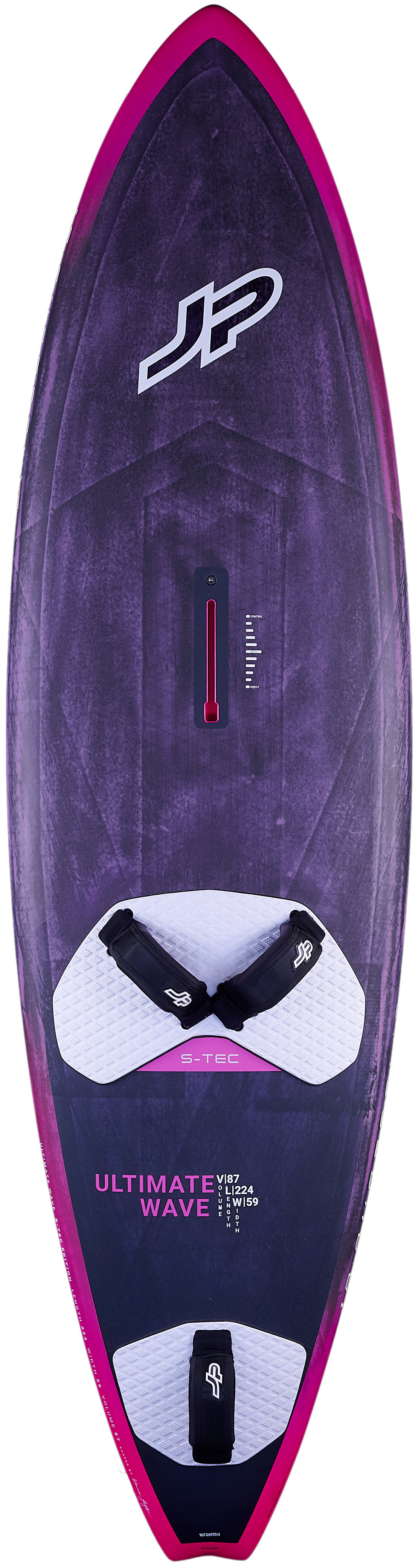
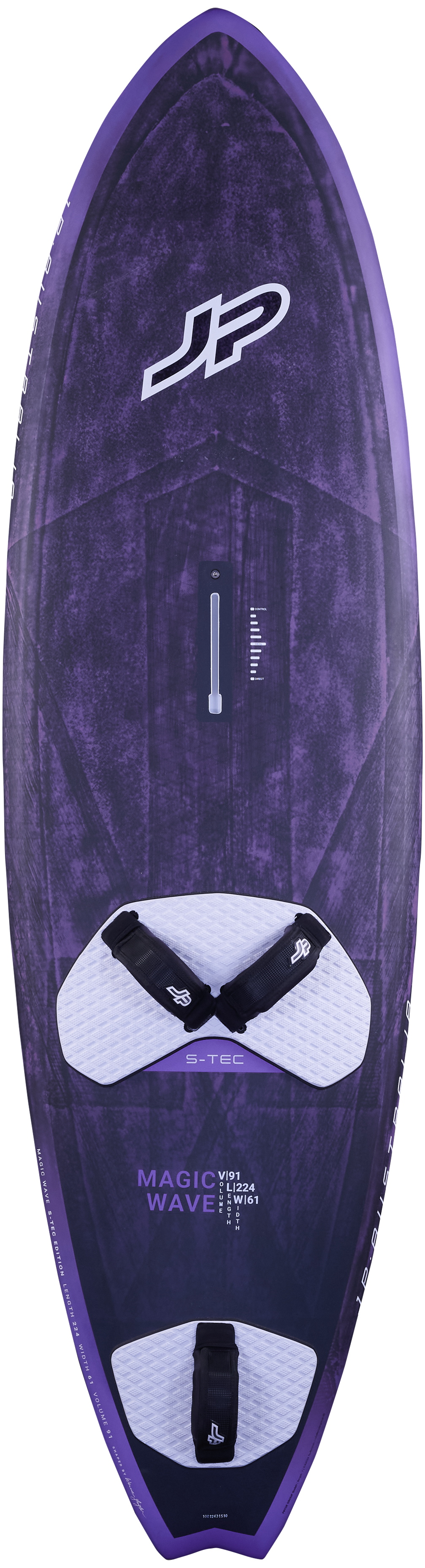
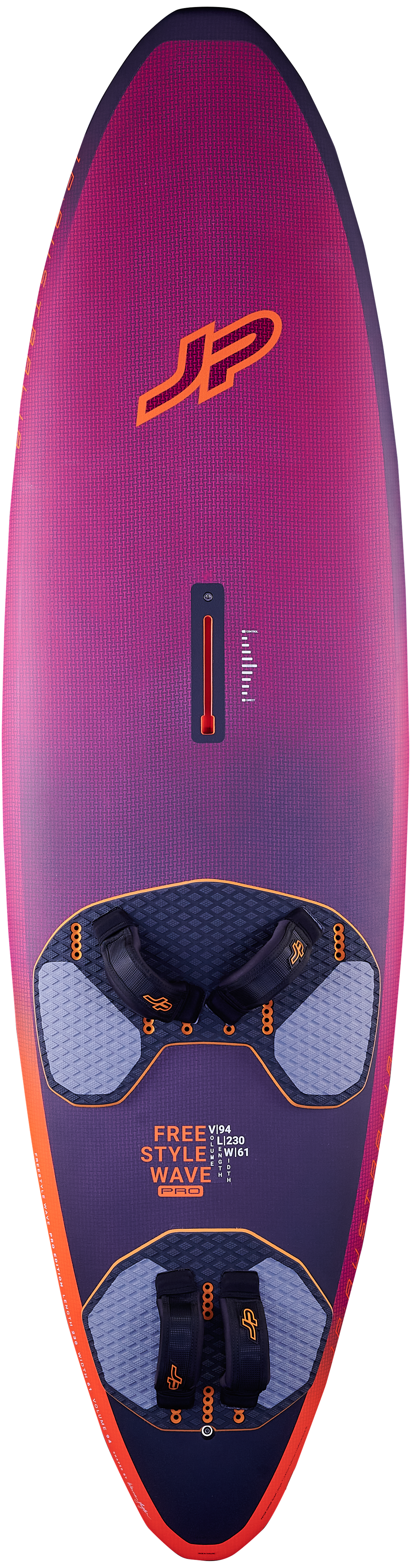
Prices and 2026 specs are pulled live from each product page. Confirm on the product page before checkout.
04 — MistakesThree mistakes we see every week
Ready to pick your next board?
Browse our full windsurf board range — all 2026 stock, all tested by our team.
Frequently asked
Wave boards are narrower (55–65 cm), curved rocker, lighter. Freestyle boards sit wider (62–72 cm), flatter rocker, more forgiving. The JP Freestyle Wave PRO splits the difference if you want both.
No. You'll spend months frustrated before the board feels right. Start at your actual weight and volume. Trade up in a year when you're confident.
Light wind (10–16 knots) needs higher volume and flatter rocker. Strong wind (20+ knots) tolerates lower volume and curved rocker. Check the product page — most brands list recommended wind ranges.
Epoxy (D/LAB, S-TEC) is stiffer, lighter, and lasts longer — but costs more. Polyester is tougher, easier to repair, and forgiving for learners. Pick epoxy if you sail 100+ days a year; polyester if you're casual or still progressing.