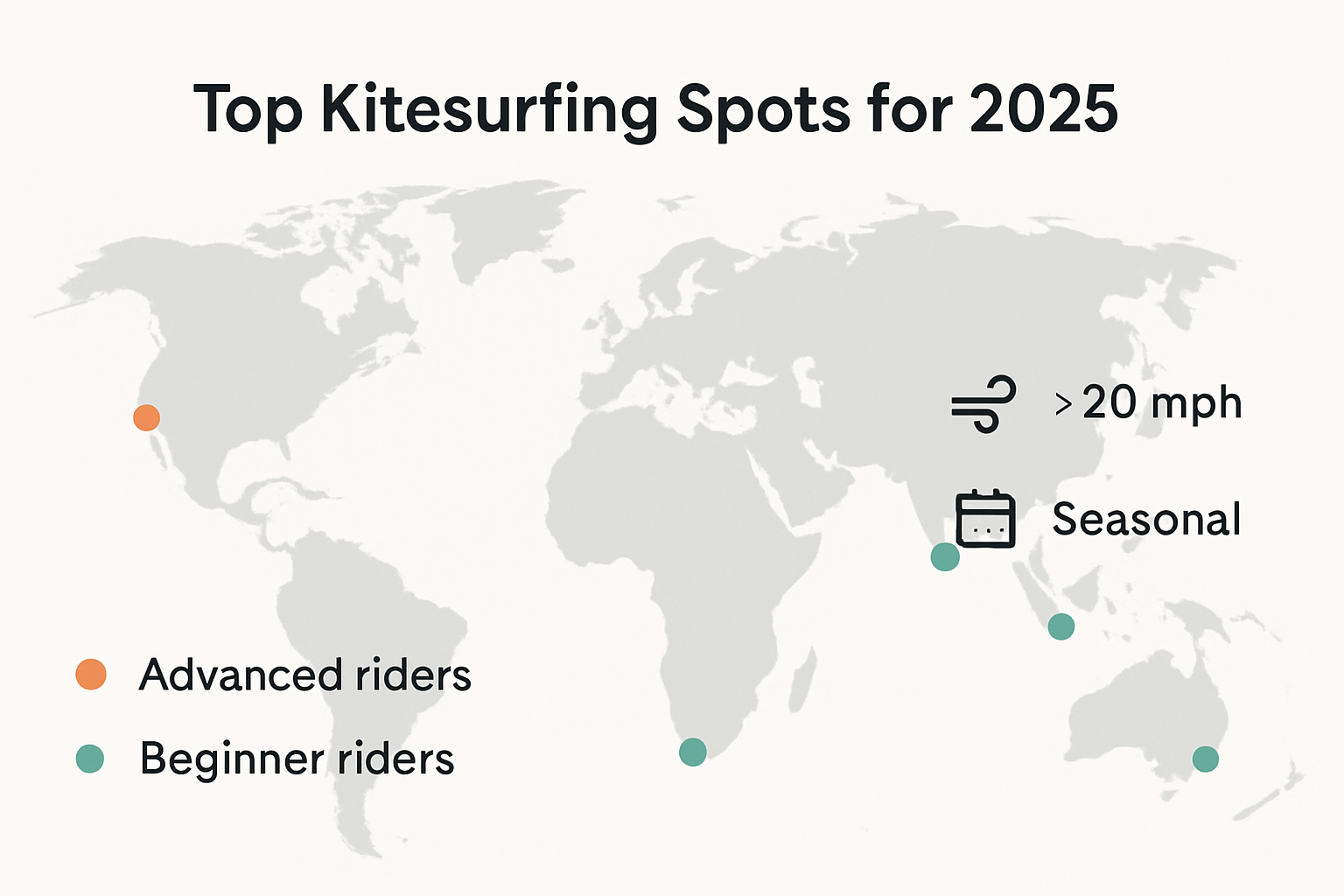
Kitesurfing destinations are popping up across the globe and every year new spots challenge the old favorites. It might sound wild, but some of the best kitesurfing locations offer wind speeds ranging from 15 to 30 knots, nearly guaranteeing reliable conditions for days on end. Most people chase the same famous beaches, though. The surprising fact is that places like Kos in Greece, Le Morne in Mauritius, and even Caracas in Venezuela are quietly matching or outshining old legends with beginner friendly bays and advanced playgrounds. Discover why the 2025 kitesurfing map looks nothing like what you expect.
Beginners should look for locations with flat water and consistent winds, while advanced kitesurfers benefit from dynamic environments with challenging conditions.
Consider Seasonal Wind Patterns
Timing is crucial; winter in Caracas offers optimal conditions, while Cape Town shines in summer, highlighting the importance of understanding seasonal variations.
Evaluate Local Infrastructure
Top destinations provide comprehensive support, including kite schools and rental services, essential for a safe and enjoyable experience.
Plan Ahead for Equipment and Logistics
Meticulous preparation, including gear selection and financial planning, is vital for a smooth trip, ensuring all aspects of the adventure are covered.
Emphasize Safety and Skill Preparation
Physical training and local knowledge about conditions and emergency protocols enhance safety and performance during kitesurfing trips.
Global Hotspots for Kitesurfing Adventures
Kitesurfing represents more than just a sport. It is a global adventure that connects riders with some of the most breathtaking wind and wave environments across the planet. Understanding the top kitesurfing destinations requires deep knowledge of wind conditions, terrain, and local nuances that make each location unique.
Wind Warriors: Prime Locations for Advanced Riders
For experienced kitesurfers seeking ultimate challenges, certain global destinations stand out with exceptional wind patterns and terrain. The coastal regions offer consistent wind speeds ranging from 15 to 25 knots, creating perfect conditions for advanced techniques and high-performance riding.
Brazil’s northeastern coastline emerges as a premier destination. Spots like Jericoacoara and Cumbuco provide steady trade winds that blow almost year round. These locations offer consistent offshore winds creating smooth, predictable conditions perfect for complex maneuvers. Riders can expect wind speeds between 18-25 knots, making these regions true paradise for experienced kitesurfers.
Another remarkable destination is Tarifa, Spain. Known as the wind capital of Europe, this location offers unique wind conditions where Mediterranean and Atlantic winds converge. Advanced riders appreciate the challenging cross-shore winds that provide exceptional opportunities for wave riding and freestyle techniques. Water temperatures remain moderate, and wind consistency makes Tarifa a top global kitesurfing hotspot.
Beginner Friendly Kitesurfing Paradises
While advanced riders seek challenging conditions, beginners require environments that offer safety, consistent winds, and professional instruction. Some global locations perfectly balance learning opportunities with stunning natural beauty.
Kos Island in Greece presents an ideal learning environment. Protected bays with flat, shallow waters create perfect conditions for newcomers to the sport. Wind speeds typically range between 12-18 knots, providing stable conditions for skill development. Local kite schools offer comprehensive training programs, ensuring new riders can progress safely and confidently.
Mauritus represents another exceptional destination for kitesurfing learners. The island’s southeast coast features shallow lagoons with crystal clear waters and consistent winds. Le Morne region specifically offers protected areas ideal for beginners, with professional instructors available to guide new riders through initial techniques. Water temperatures remain warm year round, making learning comfortable and enjoyable.
Seasonal Considerations for Global Kitesurfing
Choosing the right destination involves understanding seasonal wind patterns. Each global location experiences unique meteorological conditions that dramatically impact kitesurfing experiences. Timing your trip becomes crucial for maximizing riding potential.
Caracas in Venezuela offers incredible winter season kitesurfing from December through April. During these months, consistent trade winds create exceptional riding conditions. Similarly, Cape Town provides outstanding summer season opportunities between November and February, when southeastern winds provide perfect kitesurfing environments.
When planning global kitesurfing adventures, riders must consider multiple factors: wind consistency, water conditions, local infrastructure, and seasonal variations. Check out our comprehensive kitesurfing gear guide to ensure you are fully prepared for these incredible global destinations. Understanding these nuanced details transforms a simple trip into an extraordinary kitesurfing expedition.
Seasonal Weather and Wind Patterns Explained
Understanding seasonal weather and wind patterns is crucial for kitesurfers seeking optimal riding conditions. Wind is the lifeblood of kitesurfing, and mastering its nuances can transform an average session into an extraordinary experience.
Trade Winds: The Predictable Global Wind Systems
Trade winds represent the most reliable wind patterns for kitesurfers worldwide. These consistent wind systems develop due to the Earth’s rotation and temperature differences between the equator and polar regions. For kitesurfers, trade winds offer a predictable and powerful wind source that can be tracked and anticipated with remarkable accuracy.
In the northern hemisphere, northeast trade winds dominate from November through April. These winds create exceptional conditions in regions like the Caribbean, Brazil, and parts of Southeast Asia. Locations such as Bonaire, Dominican Republic, and Cape Verde become kitesurfing havens during these months. Wind speeds typically range between 15-25 knots, providing consistent and reliable riding conditions.
The southern hemisphere experiences its peak trade wind season from May to September. During this period, locations like Brazil’s northeastern coast, South Africa, and parts of Australia become prime kitesurfing destinations. Riders can expect steady winds that create perfect conditions for both wave riding and freestyle techniques.
Monsoon Winds: Seasonal Powerhouses
Monsoon wind systems offer another critical dimension to kitesurfing weather patterns. These seasonal wind shifts create unique riding opportunities that experienced kitesurfers eagerly anticipate. Unlike trade winds, monsoon winds are more variable and can provide dramatically different conditions throughout the year.
In India and Southeast Asia, the southwest monsoon winds blow from June to September. These winds create exceptional kitesurfing conditions in locations like Sri Lanka, Kerala, and parts of Indonesia. Riders experience wind speeds ranging from 15-30 knots, with consistent offshore and cross-shore conditions that challenge even advanced kitesurfers.
The Arabian Gulf region presents another fascinating monsoon wind scenario. From June to September, the Shamal winds blow consistently, creating perfect conditions in locations like Oman and the United Arab Emirates. These winds provide steady 20-25 knot conditions that attract international kitesurfing enthusiasts seeking reliable and powerful wind environments.
Microclimate Considerations for Kitesurfers
Beyond global wind systems, local microclimates play a crucial role in creating ideal kitesurfing conditions. Geographical features like coastal mountain ranges, bay configurations, and local temperature differences can dramatically impact wind patterns.
Tarifa, Spain exemplifies how local geography creates exceptional wind conditions. Located where the Mediterranean Sea meets the Atlantic Ocean, this region experiences unique wind tunneling effects. The Levante and Poniente winds create consistent cross-shore conditions that make Tarifa a global kitesurfing destination.
Hawaii presents another remarkable microclimate scenario. The islands topography creates wind acceleration zones, particularly on Maui’s north shore. During winter months, consistent trade winds combined with unique island geography produce some of the most reliable kitesurfing conditions globally.
Successful kitesurfing requires more than just skill. It demands a deep understanding of global and local wind patterns. Read our advanced wind forecasting guide to elevate your understanding of these complex meteorological systems. By mastering these intricate weather dynamics, riders can transform their kitesurfing adventures from good to extraordinary.
Choosing the Right Spot for Your Water Sport
Selecting the perfect water sport location requires more than just understanding wind conditions. It involves analyzing multiple factors that impact your overall experience, skill level, and safety. Experienced water sport enthusiasts know that the right spot can make or break an adventure.
Skill Level Matching: Finding Your Perfect Environment
Each water sport location presents unique challenges and opportunities that align differently with rider skill levels. Beginners and advanced riders require distinctly different environments to maximize enjoyment and progression.
For novice kitesurfers, flat water locations with consistent winds provide the ideal learning ground. Protected bays with shallow waters and steady wind conditions allow new riders to build confidence and fundamental skills. Locations like Soma Bay in Egypt or Langebaan in South Africa offer gentle learning environments with predictable wind patterns. These spots typically feature wind speeds between 12-18 knots, creating stable conditions for skill development.
Advanced riders seek more dynamic environments that challenge their technical abilities. Wave riding destinations like Maui in Hawaii or Cape Town in South Africa provide complex wind and water conditions that test even experienced kitesurfers. These locations offer challenging cross-shore winds, powerful wave sets, and terrain that demands advanced techniques and quick decision making.
Environmental Considerations Beyond Wind
Successful water sport selection goes far beyond wind conditions. Riders must evaluate multiple environmental factors that impact overall experience and safety. Water temperature, current strength, potential hazards, and local marine ecosystems play crucial roles in destination selection.
Water temperature significantly impacts rider comfort and equipment requirements. Tropical destinations like the Maldives offer warm waters around 80-85 degrees Fahrenheit, allowing riders to use lightweight wetsuits or even ride without thermal protection. In contrast, locations like Scotland or New Zealand require full thick wetsuits and potentially additional thermal layers to manage water temperatures that can drop below 60 degrees.
Local marine ecosystems and potential wildlife interactions represent another critical consideration. Some locations offer incredible marine biodiversity that enhances the riding experience. Areas like Western Australia provide opportunities to ride near dolphins and observe marine life, while other regions might have shark populations or coral reef systems that require specific safety protocols.
Infrastructure and Local Support Systems
The surrounding infrastructure plays a pivotal role in water sport destination selection. Experienced riders look beyond natural conditions to evaluate local support systems, equipment rental options, and professional instruction availability.
Top water sport destinations feature comprehensive support ecosystems. Locations like Tarifa, Spain, and Mui Ne, Vietnam, offer multiple kite schools, equipment rental shops, and repair services. These destinations provide riders with safety nets that allow them to focus on enjoying their experience without worrying about logistical challenges.
Local wind and weather forecasting services also distinguish premier water sport locations. Regions with sophisticated meteorological support systems help riders make informed decisions about when and where to ride. Advanced forecasting tools, local wind stations, and real time reporting create environments where riders can plan their sessions with maximum confidence.
Choosing the right water sport location is an art form that combines technical knowledge, personal skill assessment, and adventure spirit. Explore our comprehensive destination guide to unlock insights that will transform your next water sport adventure. Understanding these nuanced selection criteria turns an ordinary trip into an extraordinary experience.
Tips for Planning Your Perfect Riding Trip
Planning a kitesurfing trip requires more than spontaneous excitement. Successful riders approach their adventures with strategic preparation, understanding that thoughtful planning transforms good experiences into unforgettable journeys.
Essential Pre Trip Preparation
Effective trip planning starts long before you pack your gear. Comprehensive research and meticulous organization become your primary tools for creating a seamless kitesurfing expedition.
Equipment selection represents the first critical step. Riders must carefully match their gear to anticipated destination conditions. This means considering wind range, potential wave heights, and local terrain characteristics. Lightweight travel boards with versatile performance capabilities allow maximum flexibility across different riding environments. Consider packing a quiver that includes both wave and freestyle boards to ensure you are prepared for multiple riding scenarios.
Travel logistics demand equally careful consideration. Many experienced kitesurfers recommend shipping critical equipment separately or choosing specialized travel gear bags that protect valuable boards and kites. Insurance coverage for sports equipment becomes crucial. Comprehensive travel insurance that specifically covers water sports can provide peace of mind and financial protection against potential gear damage or trip interruptions.
Financial and Logistical Strategies
Budget management plays a significant role in successful kitesurfing trips. Smart riders understand that expenses extend far beyond equipment and travel costs. Developing a comprehensive financial strategy helps prevent unexpected challenges during your adventure.
Accommodation selection requires strategic thinking. Proximity to riding locations, access to equipment rental shops, and potential wind monitoring stations should guide your choices. Many top kitesurfing destinations offer specialized accommodations with gear storage, repair facilities, and direct beach access. These options might cost slightly more but provide significant convenience and potential savings in long term logistics.
Local currency management becomes another crucial consideration. Research payment methods accepted in your destination, potential transaction fees, and recommended cash reserves. Some remote kitesurfing locations have limited banking infrastructure, making advance financial planning essential. Carrying multiple payment options and maintaining a small cash reserve ensures you remain flexible during your adventure.
Safety and Skill Preparation
Physical and technical preparation forms the foundation of a successful kitesurfing trip. Riders must approach their adventure with a holistic preparation strategy that encompasses physical conditioning, skill refinement, and safety awareness.
Pre trip physical training should focus on core strength, flexibility, and cardiovascular endurance. Targeted exercises that mimic kitesurfing movements help prepare your body for extended riding sessions. Incorporate swimming, yoga, and resistance training to build the specific muscle groups used in kitesurfing.
Technical skill assessment represents another critical preparation element. Consider taking refresher lessons or advanced technique workshops before your trip. Many destinations offer local clinics that help riders adapt to specific wind and wave conditions. Understanding local riding nuances can dramatically improve your performance and safety.
Emergency preparedness goes beyond physical skills. Research local medical facilities, understand potential marine hazards, and familiarize yourself with local emergency contact protocols. Carrying a comprehensive first aid kit specifically designed for water sports environments provides an additional layer of safety.
Planning a kitesurfing trip combines technical knowledge, strategic preparation, and adventurous spirit. Check out our comprehensive travel preparation guide to transform your next riding expedition from good to extraordinary. Thoughtful preparation turns potential challenges into opportunities for incredible experiences.
Frequently Asked Questions
What are the best locations for beginner kitesurfers in 2025?
Beginner kitesurfers should consider locations like Kos Island in Greece and Le Morne in Mauritius. These areas offer flat, shallow waters and consistent wind conditions suited for learning.
Ploče – Neretva River: A Hidden Gem for Beginner Kiteboarders
If you're new to kiteboarding and looking for a spot with forgiving conditions, Ploče on the Neretva River in Croatia is a perfect choice. Known for its wide sandy delta and shallow, flat waters, this area offers ideal learning conditions with plenty of space and consistent thermal winds during the summer months.
The reliable afternoon wind, often around 15–25 knots, makes it especially beginner-friendly, while the calm river surface allows for smooth rides and easier progression. Several local schools offer lessons and equipment rental, making it a welcoming spot for first-timers.
Whether you're taking your first steps on the board or looking to build confidence, the Neretva River kite spot in Ploče combines natural beauty, steady conditions, and a laid-back vibe — a must-visit for aspiring kiteboarders.
El Gouna, Egypt – Reliable Wind and Shallow Lagoons El Gouna is a top pick for beginners thanks to its consistent thermal winds and huge flat-water lagoons. The warm Red Sea, sandy bottom, and professional kite schools make learning smooth and stress-free. With reliable wind almost year-round, it's one of the most beginner-friendly spots in the world.
Kos Island, Greece – Calm Waters and Meltemi Winds On Kos Island, especially around Psalidi or Marmari beaches, beginners can enjoy steady meltemi winds and waist-deep turquoise water. The mellow beach break and local kite centers create the perfect environment for building skills in a safe and scenic setting.
Le Morne, Mauritius – Paradise for Learners Le Morne offers stunning lagoon conditions protected by a reef. Beginners can ride in crystal-clear, waist-deep water with reliable trade winds from June to October. It’s ideal for both beginners and families looking to combine a tropical getaway with easy kite sessions.
Zanzibar, Tanzania – Warm Water and Gentle Wind Paje Beach on Zanzibar’s east coast is perfect for learning. With two solid wind seasons (December–March and June–September), shallow tidal lagoons, and relaxed African vibes, Zanzibar is a dreamy spot for beginners looking for adventure and progression.
Cumbuco, Brazil – Consistency and Flat Water Famous for its butter-flat lagoons and daily wind from August to January, Cumbuco is a beginner’s heaven. The Cauipe Lagoon offers perfect learning conditions with plenty of kite schools and space for safe practice under the sun.
Which places are ideal for advanced kitesurfers?
Advanced kitesurfers will find excellent conditions in destinations like Jericoacoara and Cumbuco in Brazil, as well as Tarifa in Spain. These locations feature challenging winds and dynamic environments that cater to high-performance riding.
How do seasonal wind patterns affect kitesurfing?
Seasonal wind patterns significantly impact kitesurfing conditions. For example, Caracas in Venezuela provides optimal riding in winter, while Cape Town shines in summer with its consistent winds. Understanding these patterns can maximize your riding experience.
What factors should I consider when choosing a kitesurfing destination?
When selecting a kitesurfing destination, consider your skill level, seasonal wind patterns, local infrastructure (like kite schools and rental shops), and environmental factors such as water temperature and marine life safety.
Take Your 2025 Kitesurfing Adventure Further With the Right Gear
You have explored the world’s top kite spots and learned why perfect wind and smart planning make or break your experience. Yet chasing the right wind is only half the journey. Not having reliable gear or fast access to trusted equipment can hold you back, whether you are a first-timer at Le Morne or pushing your skills in Tarifa. The challenge is real. If your current gear is outdated or the options seem overwhelming and confusing, you risk missing out on those epic sessions you read about. Your goals deserve more than guesswork or last-minute stress.
Let your progression match your passion. Discover new possibilities at Surf-store.com, where you can find top kitesurf brands and curated collections for every skill level. Compare the latest gear before you commit and get expert guidance that fits your destination and season. Shop now so you never miss the season’s best conditions. Adventure waits for no one—be ready before your next wind window opens.