What to Expect in Your First Kitesurfing Lesson — Beginner Guide
Your first kitesurfing lesson isn't a free-for-all on the water. It's a structured 4–5 hour progression: safety theory, land training with a trainer kite, then supervised water time once you've proven control. Here's exactly what happens.
Expect 45 minutes of safety briefing, 1.5–2 hours of land-based kite control with a small trainer kite, then supervised water time on a 9–12 m² kite once your instructor sees you're ready. You'll learn wind reading, bar release drills, and edge control. Most riders finish their first lesson confident, not wrecked.
01 — Theory & foundationThe Safety Brief: What You'll Learn First
Before any kite gets unpacked, you're sitting down for 45 minutes. Your instructor will cover the wind window (the safe zone where a kite works), how to read gusts by watching the water, and the golden rule: when in doubt, release the bar. You'll also learn body positioning, why the chicken loop exists, and what happens if you panic. This isn't busywork—it's how you stay safe.
You'll also practise the bar release on dry land. This matters. A lot. If something goes wrong on the water, your instinct needs to be release first, think later. Your instructor will make you do it ten times until it's muscle memory, not a thought.
02 — Hands-on controlLand Training: Mastering the Kite Before Water
After theory, you'll move to the beach with a trainer kite—usually a 2–3 m² kite or a small inflatable. This is where you learn to fly. Your instructor will guide your hands through figure-eights, show you the neutral power zone, and teach you edge control. The trainer kite won't generate much lift, but it teaches you how a kite responds to bar input without the intimidation of real power.
Once you're comfortable, your instructor will move you to a 9 m² or 12 m² kite—still on land, still tethered. You'll feel real wind pressure now. The goal: prove you can keep the kite overhead, transition between edges smoothly, and release the bar in one fluid motion. No water yet. Just kite mastery on solid ground.
03 — Our picksYour First Water Time: What Actually Happens
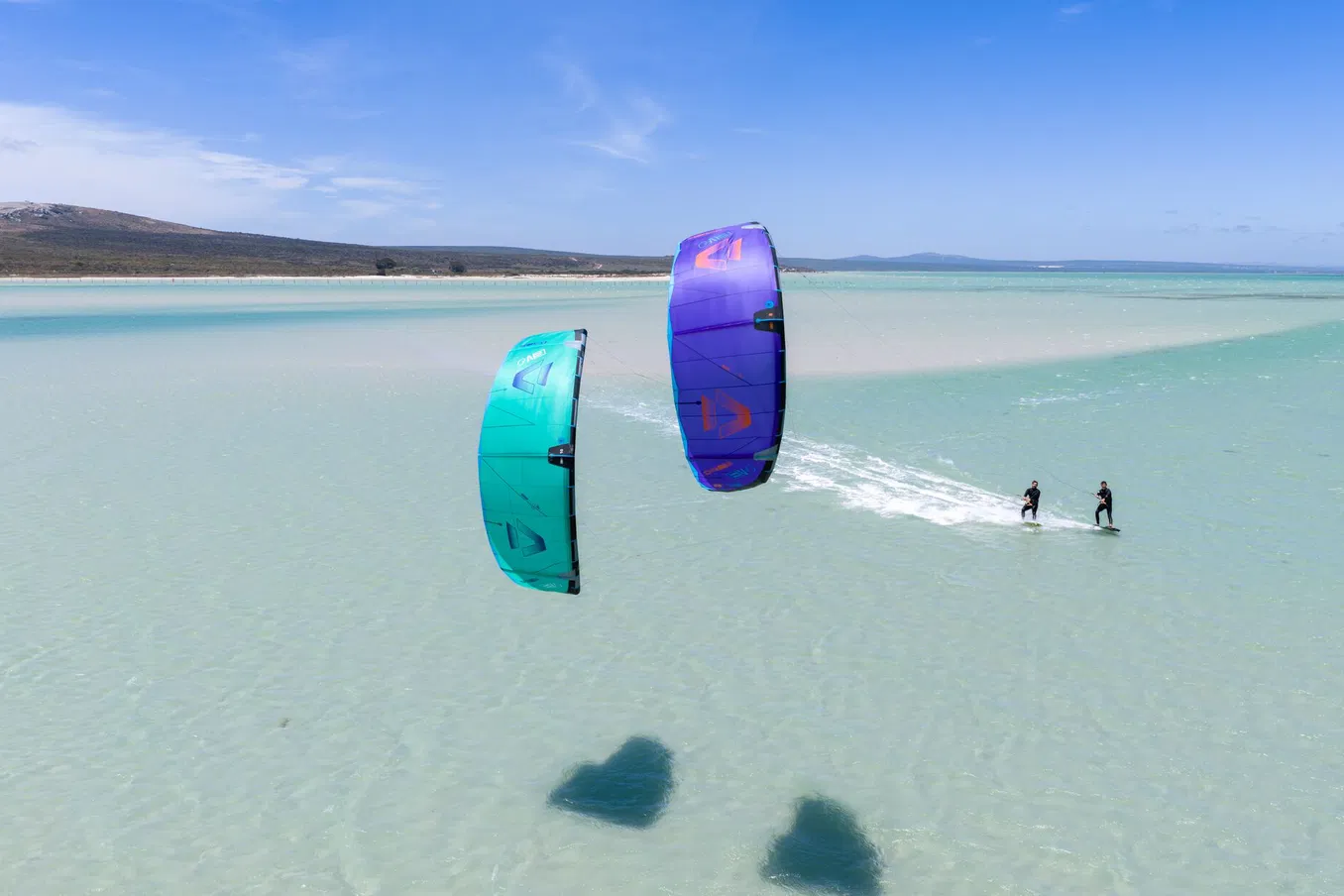
Once your instructor is confident you can handle the kite, you'll wade in with your board and a 9–12 m² kite—usually a Duotone Evo SLS, Rebel SLS, or Dice SLS, depending on your weight and wind. You won't go far. Your instructor will stay in the water with you, watching your approach angle, your board control, and your nerve.
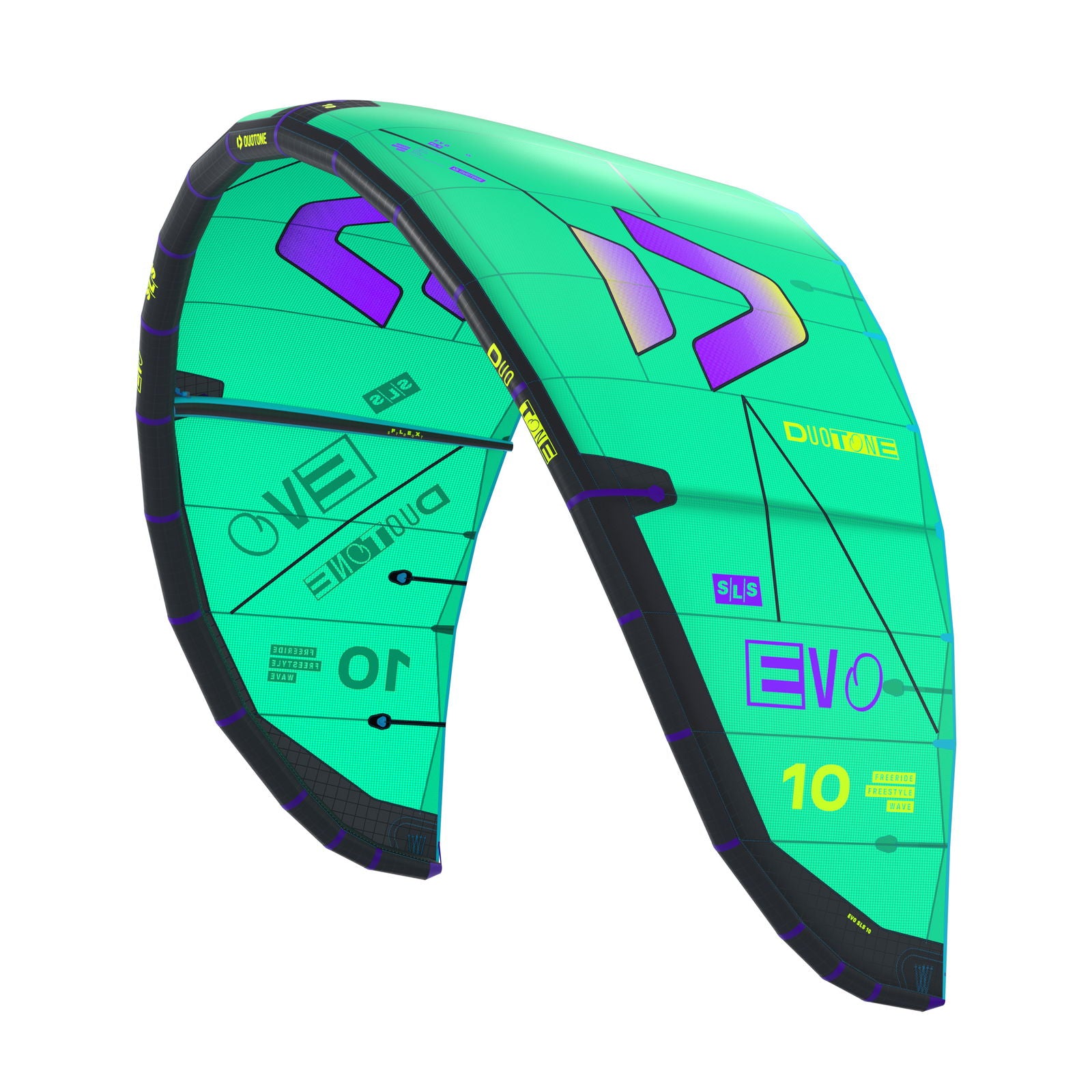
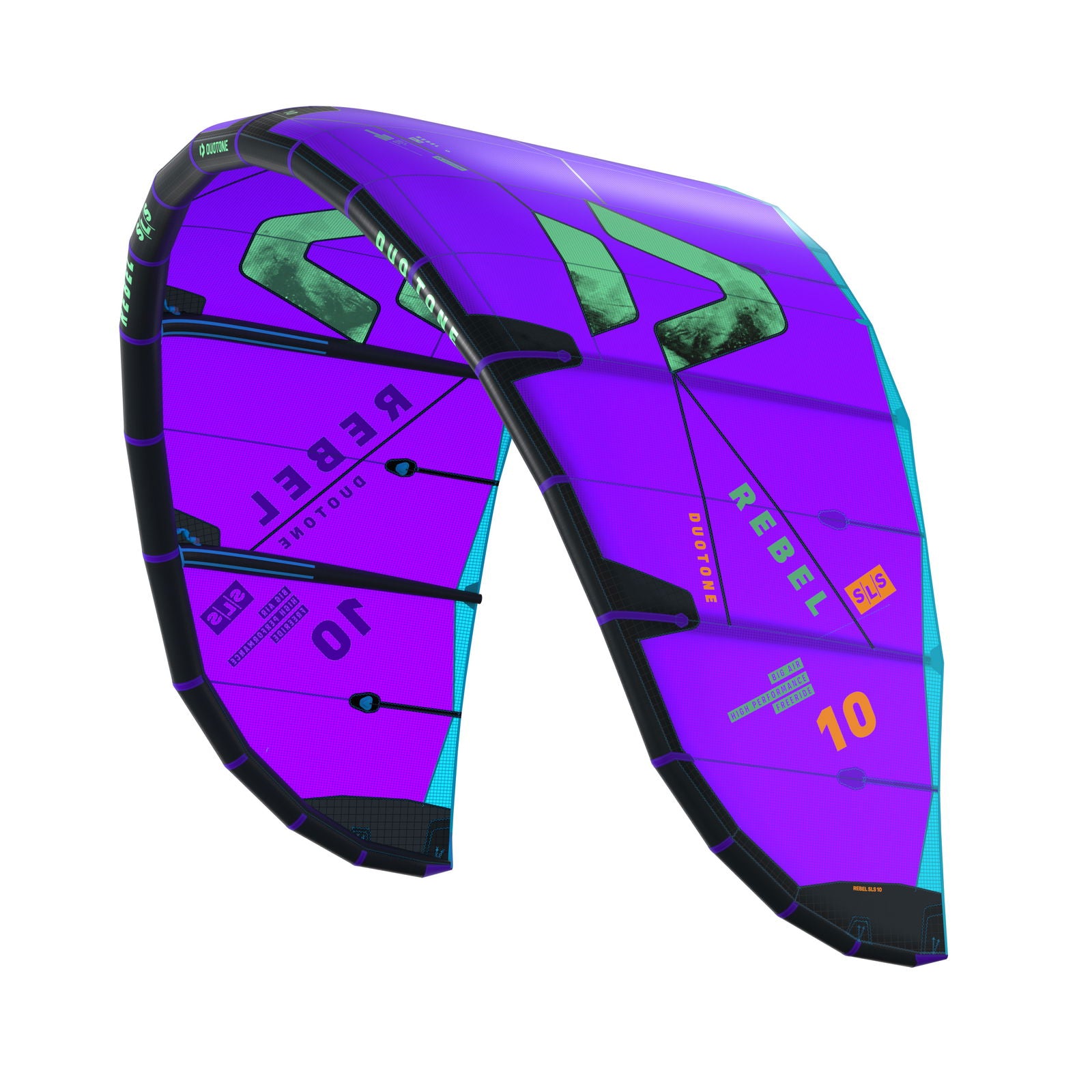
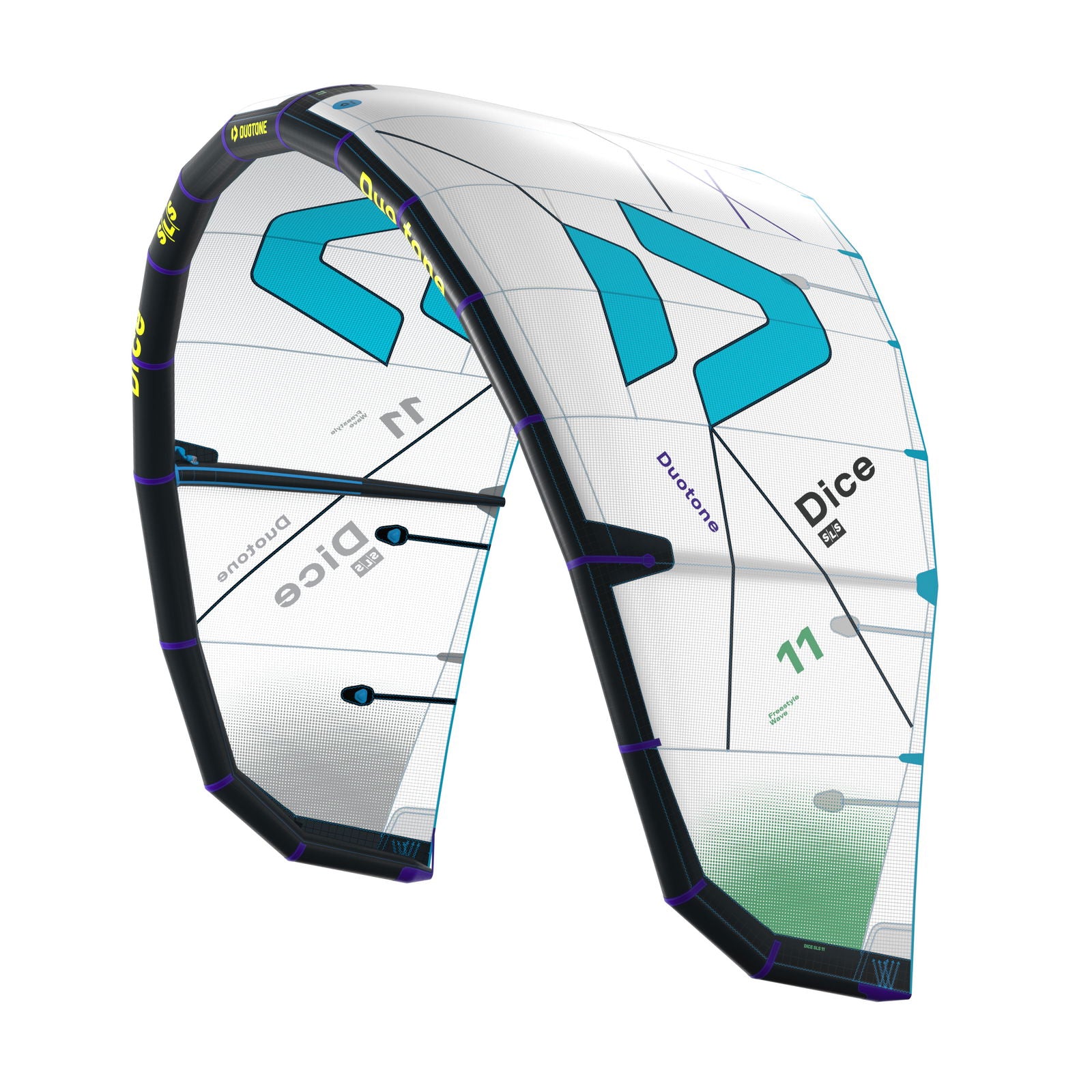
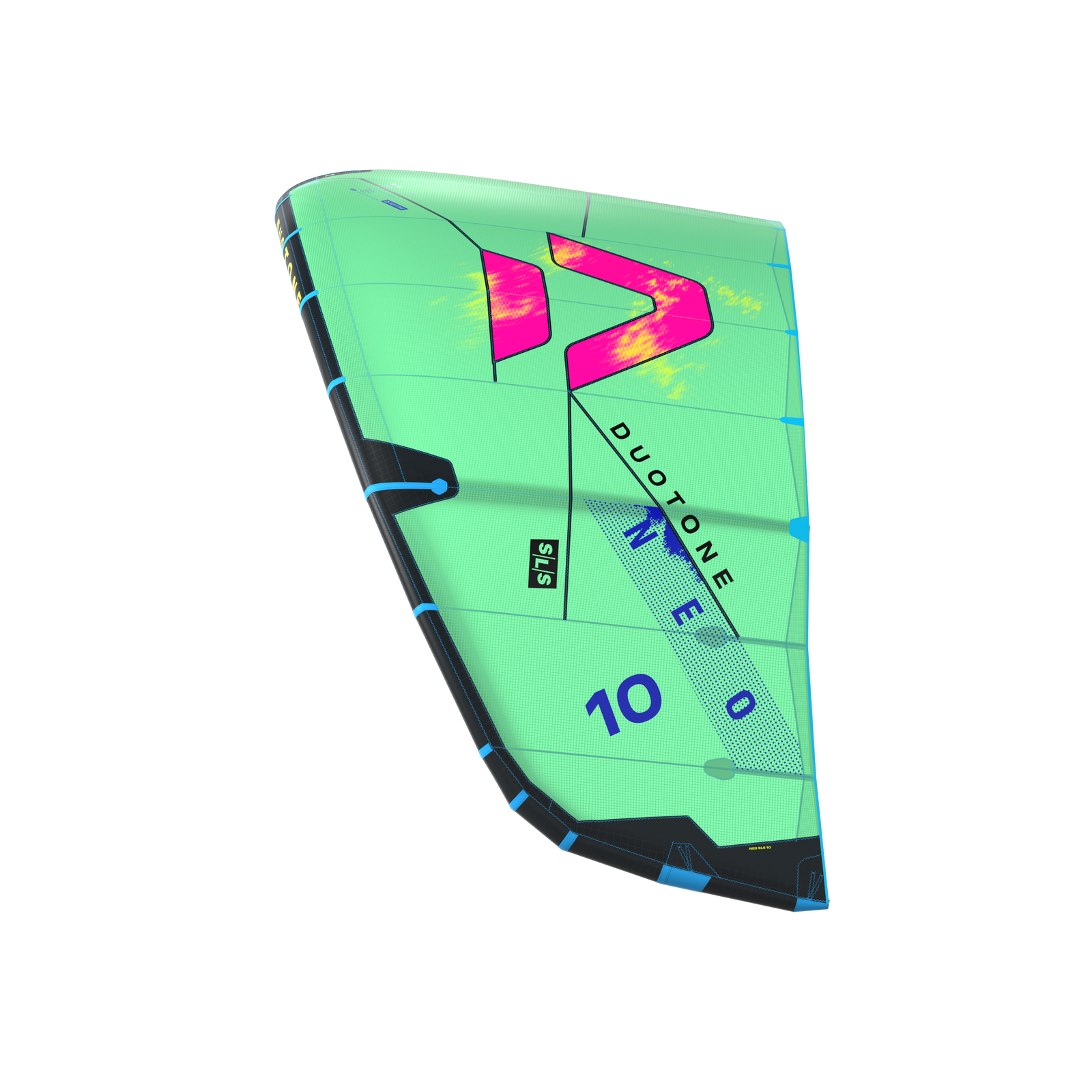
Prices and 2026 specs are pulled live from each product page. Confirm on the product page before checkout.
04 — MistakesThree mistakes we see every week
Ready for your first lesson?
We stock Duotone, Cabrinha, and Gaastra kites—talk to us about the right size for your lesson.
Frequently asked
Your instructor will choose between 9 m² and 12 m² depending on the wind (12–20 knots is ideal for beginners) and your weight. A 9 m² kite is easier to control; a 12 m² gives more power. We recommend starting with a 9 m² if the wind is light, 12 m² if it's steady.
Usually 1.5–2 hours. Your instructor will spend time on bar control, edge transitions, and release drills until you're confident. Don't rush this—it's the foundation for safe water time.
Most riders get 20–40 minutes of water time in their first lesson, often just learning to edge and transition. Some nail their first small ride. Don't expect to be riding wave to wave—that comes later.
A good instructor will adjust the plan. If wind dies completely, you might move to kite control drills or theory work. If it picks up unexpectedly, you might swap to a smaller kite or shorten water time. Flexibility keeps you safe and learning.