How to Transport a Windsurf Board on a Car — Roof Rack Guide
Your JP or Tabou board isn't cheap, and roof-rack damage is permanent. We'll walk you through the exact setup—padding, positioning, straps—so your board arrives intact every time.
Secure your board upside-down (fin facing the roof) on padded crossbars, use soft nylon straps at nose and tail, keep speed steady, and check tie-points every 30 minutes. Never use bare metal bars—they'll wreck your rails.
01 — OrientationWhy Board Position Matters
Flip your board upside-down before it touches the rack. Fin pointing at the roof, bottom facing the wind. This cuts drag, protects the fin from impact, and keeps your precious rails—the ones you'll need for carving—away from loose straps and metal edges.
We've shipped JP Ultimate Wave S-TEC and Tabou boards across Europe for 20+ years. The riders who arrive with damage? Almost every time, they loaded upright. Wind catch at 100 km/h will lift an upright board and twist it sideways on the bars. Not fun.
02 — ProtectionPadding and Anchor Points
Wrap your crossbars with closed-cell foam padding or pool noodles—at least 5 cm thick. Your board's rails will thank you. Position the bars roughly under the widest part of the deck, never over the fuselage or near the edges where the board flexes.
Use soft nylon straps (never rope) at nose and tail. Loop them under the bars, not over the board—over-the-top straps dig into the deck on long drives. Tighten until snug, but don't crank it. Your JP Freestyle Wave PRO or Magic Wave should not flex or rock side-to-side. If you're heading over 200 km, stop and check every 30 minutes. Straps slip. Metal expands. Better safe.
03 — Our picksOur 4 In-Stock Picks
Whether you're chasing waves on a JP Magic Wave Purple or hitting harder conditions on the JP Ultimate Wave S-TEC, these boards all ride the same roof-rack rules. Pick by volume and conditions, not by colour.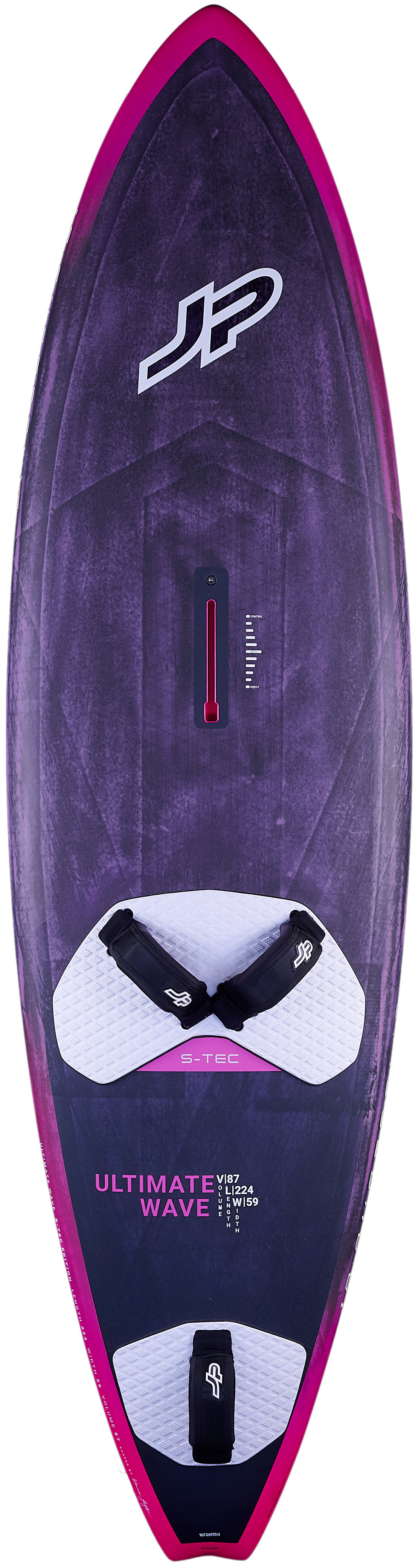
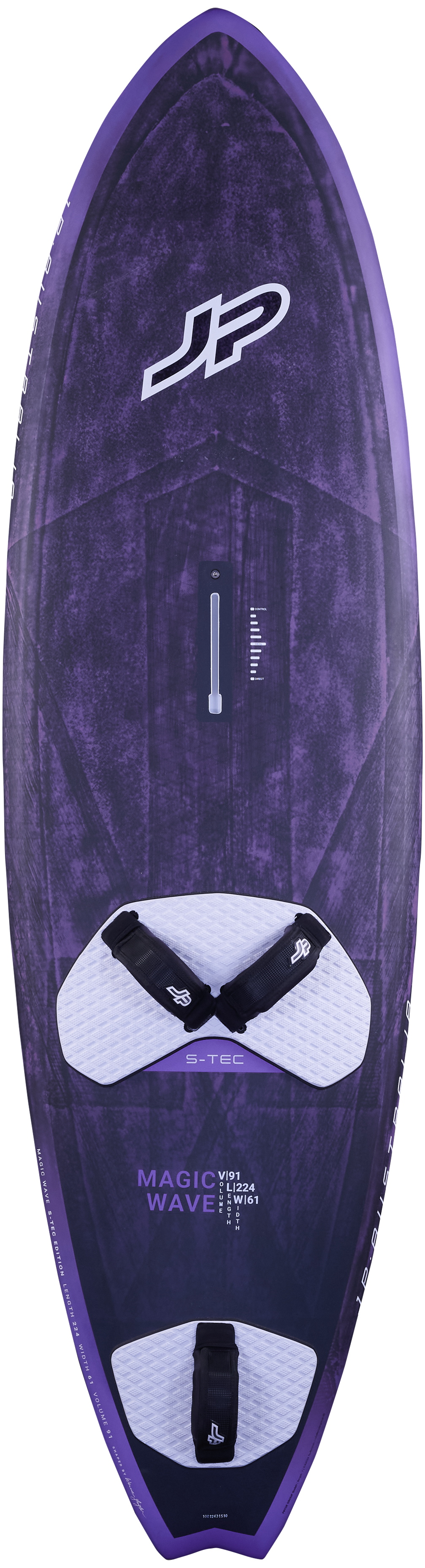
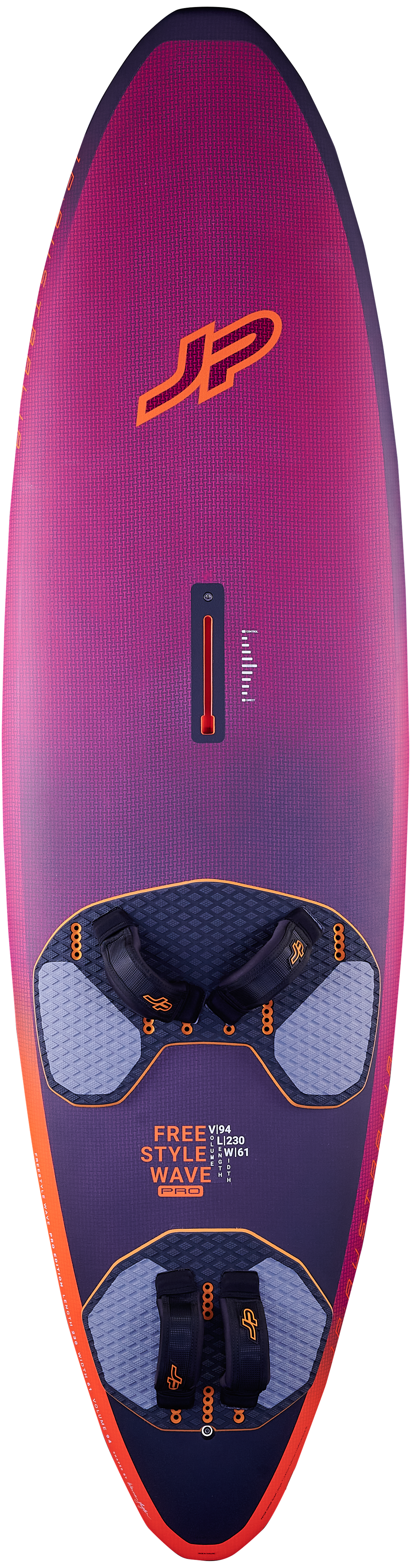
Prices and 2026 specs are pulled live from each product page. Confirm on the product page before checkout.
04 — MistakesThree mistakes we see every week
Ready to gear up?
Browse our full windsurf board range and find the right volume for your riding style and local conditions.
Frequently asked
Yes, but stack them base-to-base with foam padding between, then pad the top board's rails too. Double-check tie-points—two boards double the wind load.
Use a car-top carrier or soft board bag strapped across the roof. Never lay it directly on paint—it'll scratch. Invest in a proper rack if you're transporting regularly.
Snug enough that the board doesn't rock side-to-side, loose enough that you can slide one finger under. Too tight and you'll crack the deck; too loose and it'll shift.
Not if your fin is protected (covered or facing the roof). But if space is tight or you're nervous, yes—remove it and bag it separately. Takes 30 seconds.