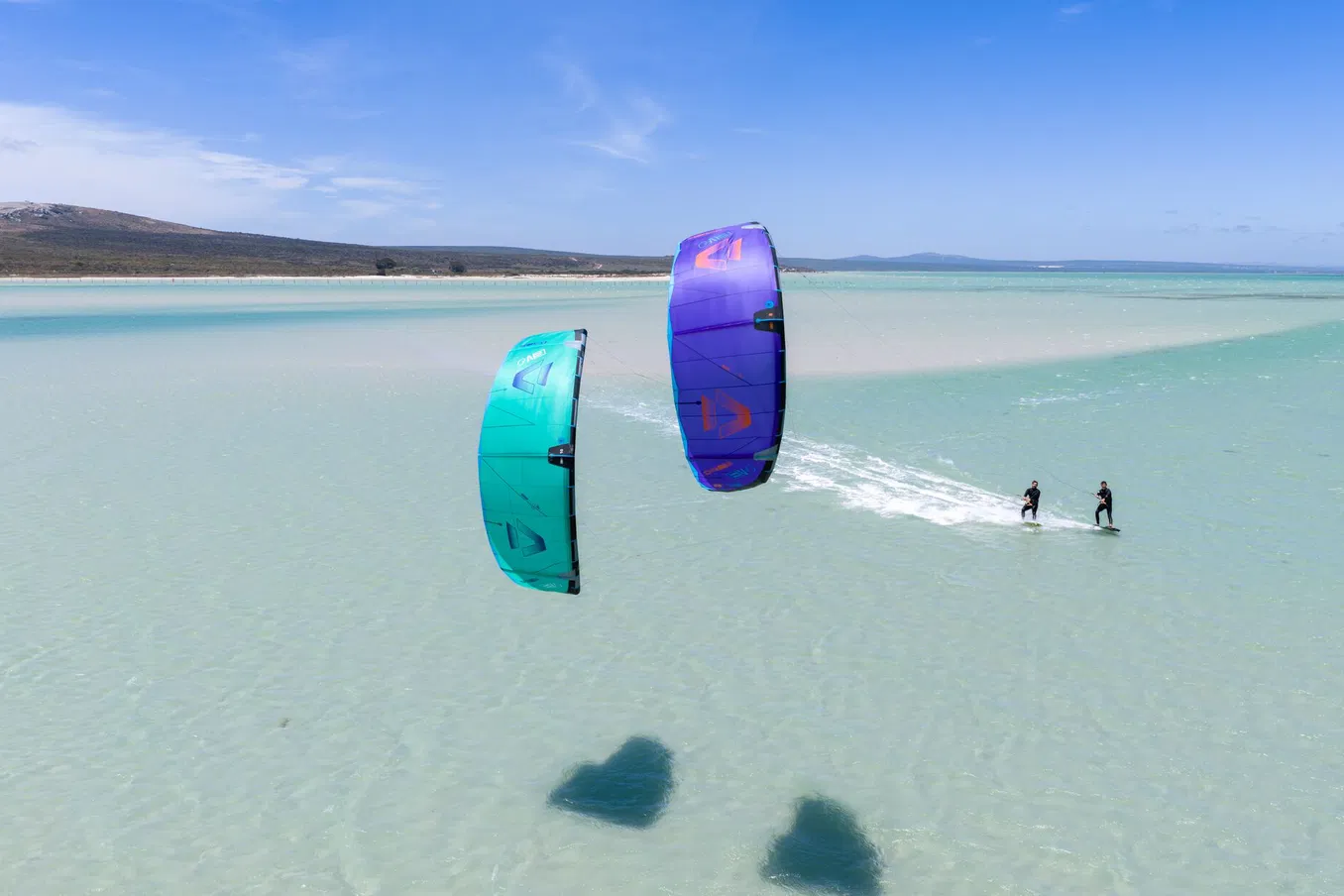
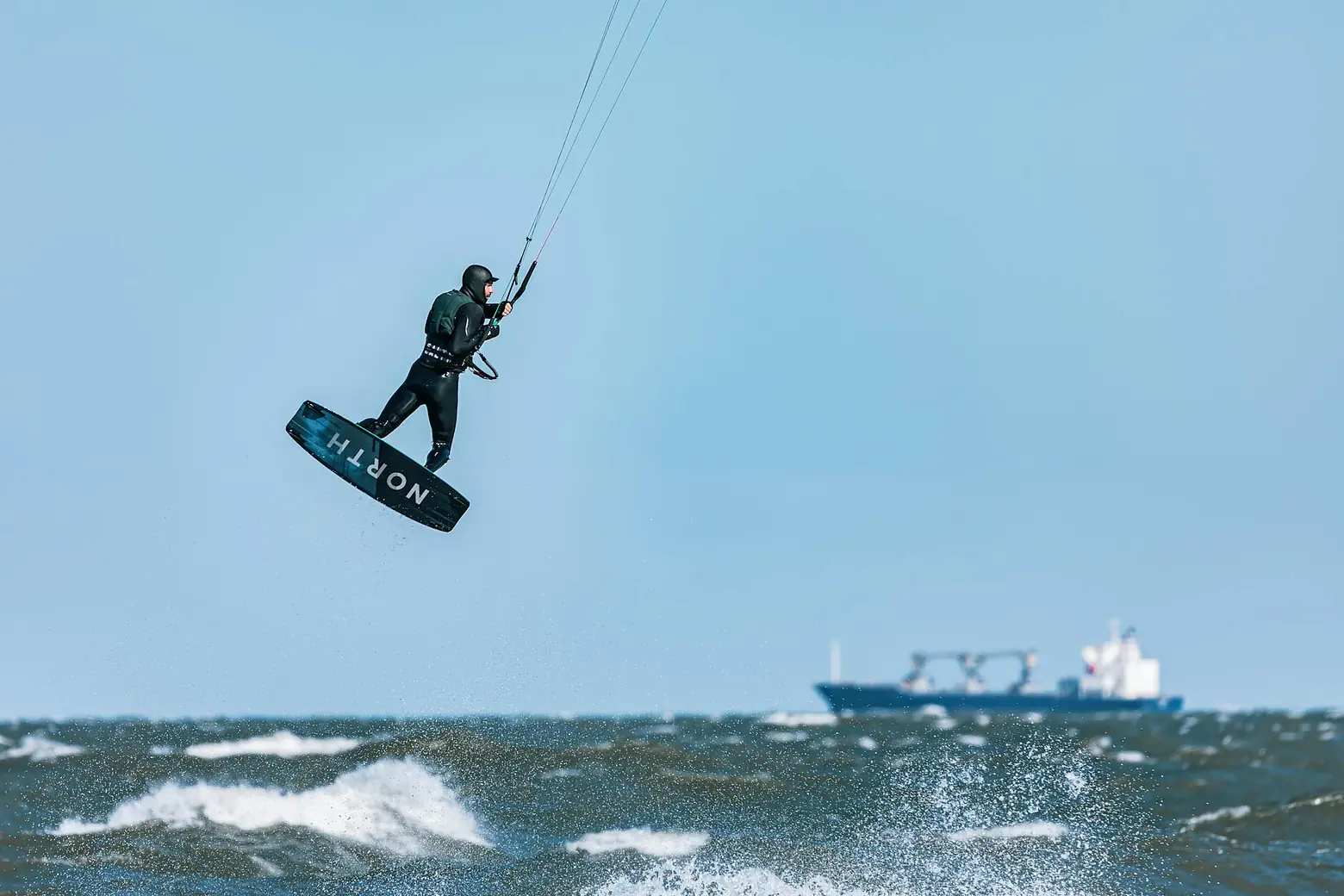
Cabrinha Switchblade vs Duotone Evo 2026
The Duotone Evo SLS 2026 and Cabrinha Switchblade Apex 2026 are both premium all-rounders, but they split on what matters: one favours stability and low-end power, the other rewards drift and freestyle flair. We'll break down exactly which one suits your riding style.
Pick the Duotone Evo SLS 2026 if you want forgiveness, low-wind grunt, and speed—it's the safer all-rounder. Choose the Cabrinha Switchblade Apex 2026 if you're after playfulness, responsive turning, and freestyle potential. Both cost the same, so it's pure riding preference.
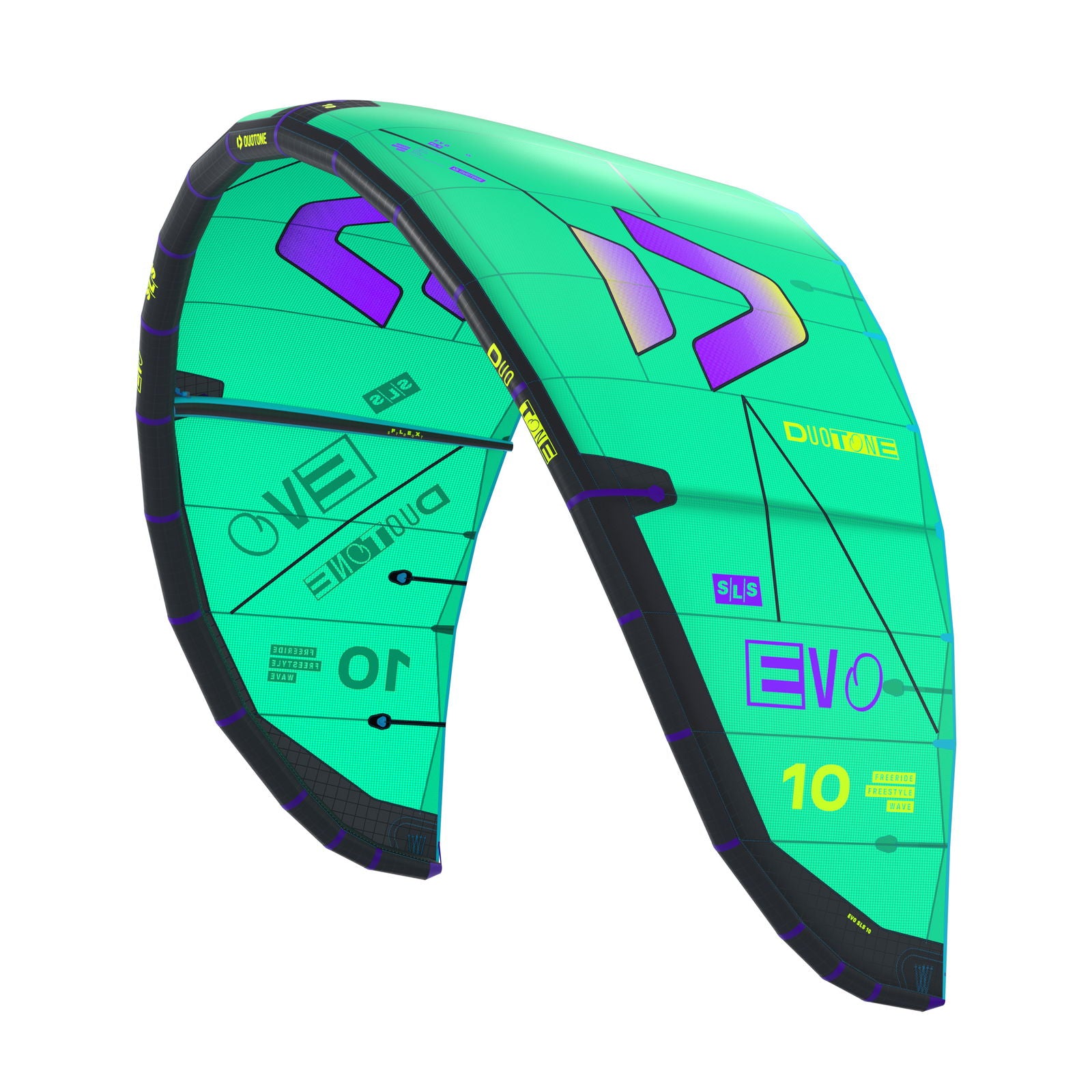
01 — Forgiving all-rounderDuotone Evo SLS — Stability & Low-End Power
The Evo is built for riders who want to feel in control across the wind window. It sits at 8–22 knots, meaning you'll get grunt in lighter conditions without needing a bigger kite. The platform is forgiving—it won't punish mistakes.
You'll notice the Evo locks in early and holds edge. That means less pump, more glide. Riders from Tarifa tell us it's their go-to for learning new tricks because the kite sits predictable in the window. Speed is real too—the shape tracks dead straight in powered conditions.
Best for: riders 65–90 kg learning the basics, or anyone who values consistency over flash.
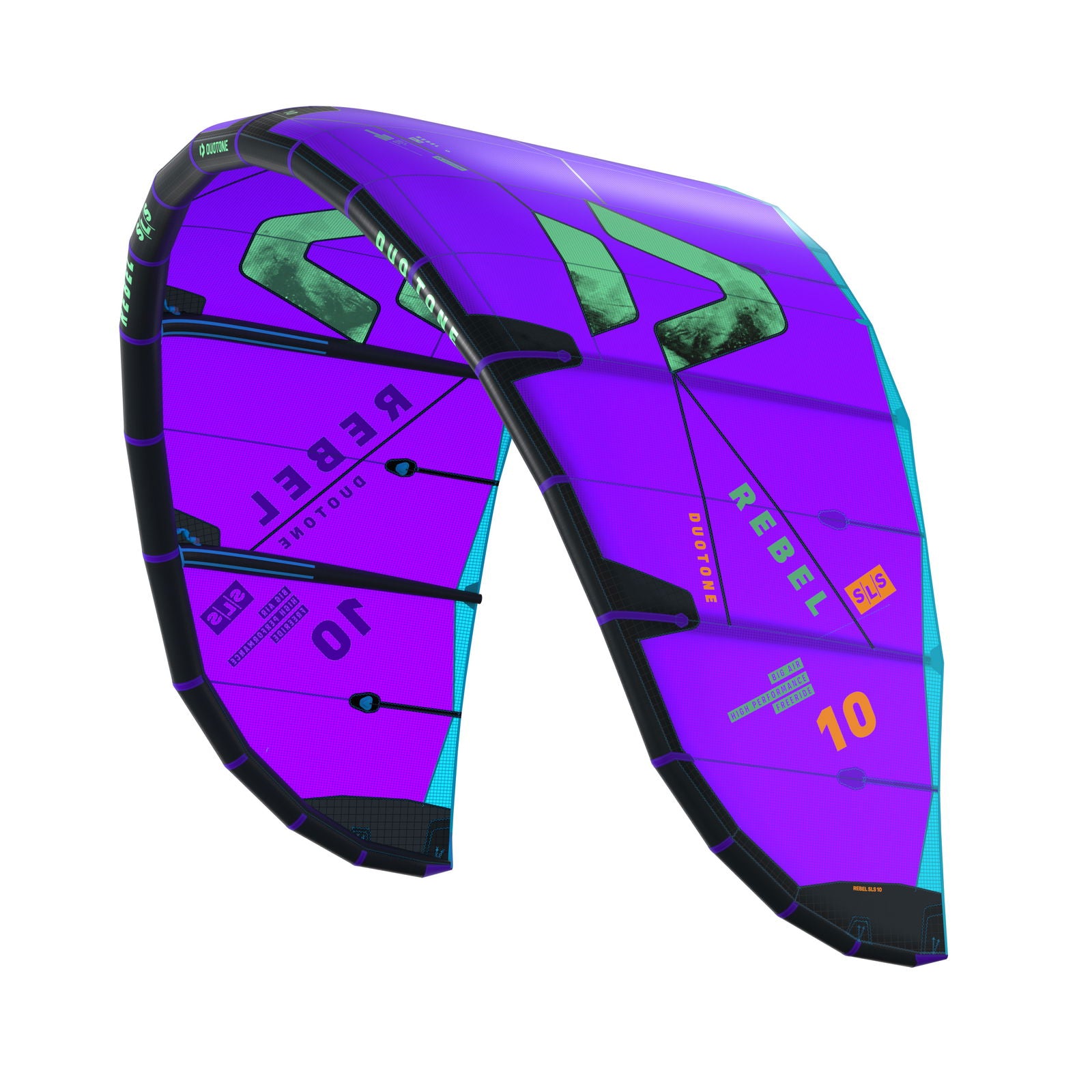
02 — Playful performerCabrinha Switchblade Apex — Responsive & Freestyle Play
The Switchblade Apex rewards active hands. It's snappier, more responsive in the window, and it loves small inputs. Freestyle riders pick this because the kite turns on a dime and gives you direct feedback on every movement. Drifts feel intentional, not accidental.
Wind range sits at 10–24 knots, so you're slightly narrower at the low end than the Evo—but that's the trade-off for playfulness. If you're comfortable reading the wind and you ride twin-tip, this kite will feel like an extension of your style. Rotations are tighter. Pop is there.
Best for: riders 70–95 kg who've found their feet and want to push into freestyle or big-air.
03 — Our picksOur 4 In-Stock Picks
We stock both the Evo and Switchblade, plus two other Duotone platforms that round out a quiver. Grab 9 m² for light days, 12 m² for steady conditions—that's most of what you'll ride.
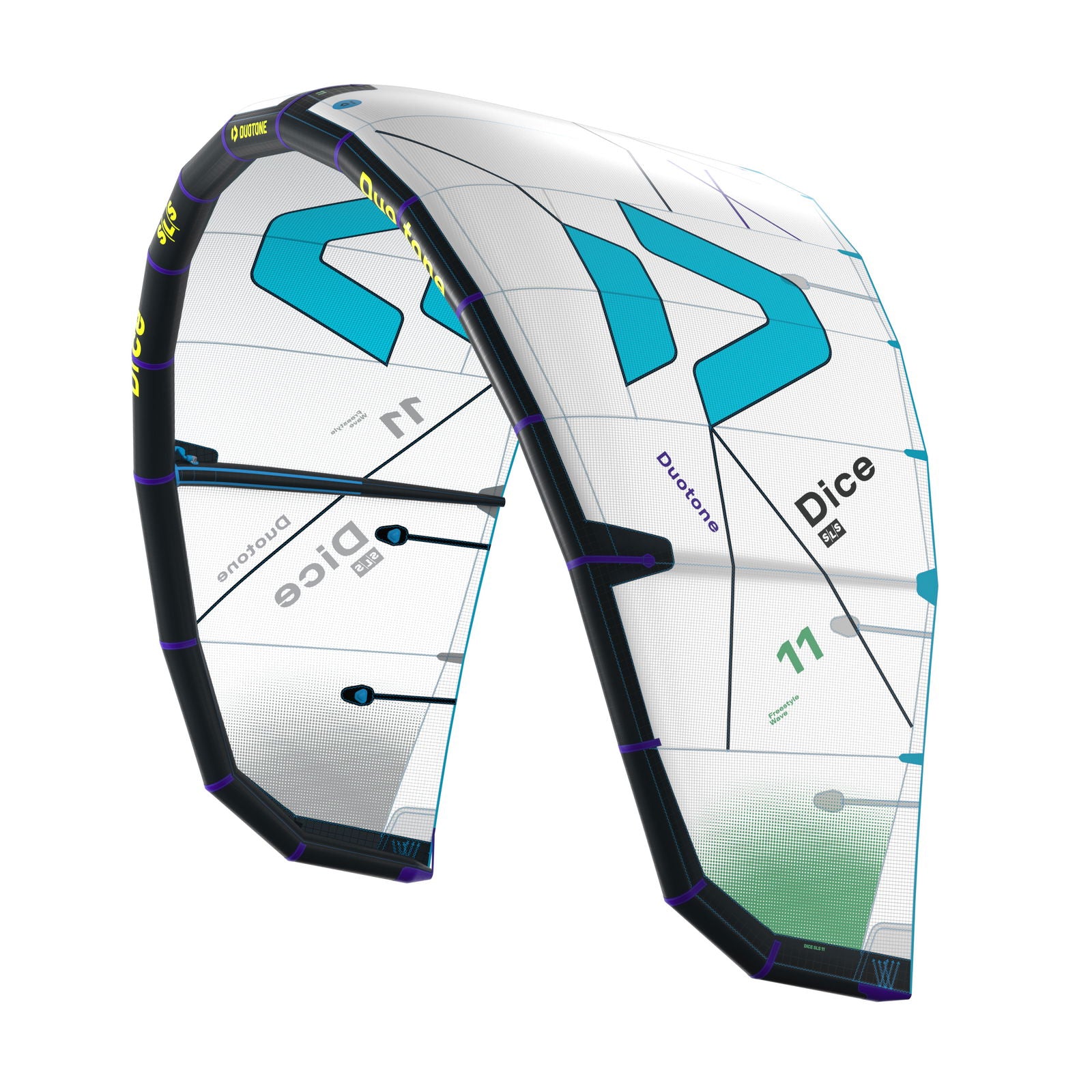
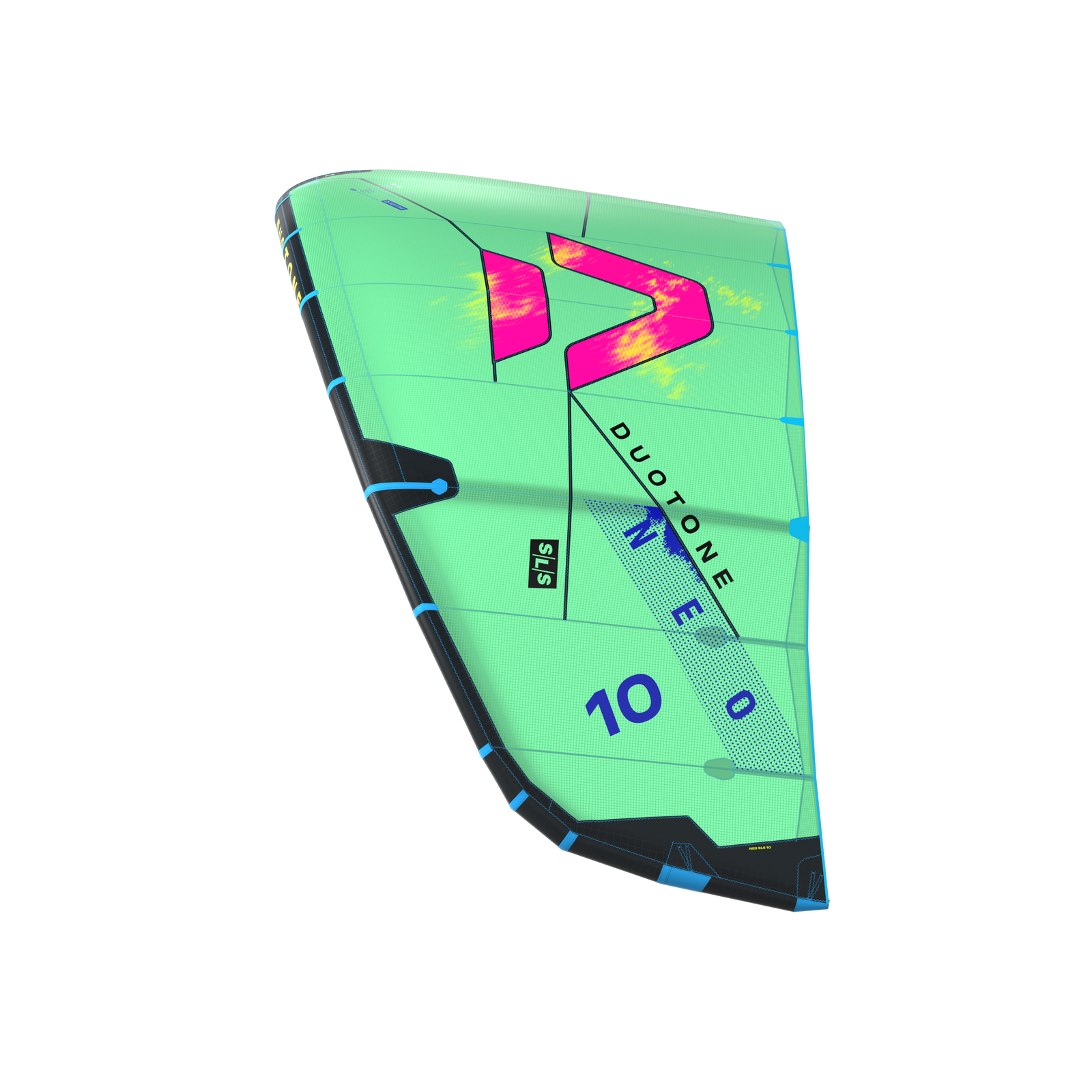
Prices and 2026 specs are pulled live from each product page. Confirm on the product page before checkout.
04 — MistakesThree mistakes we see every week
Ready to commit?
Browse our full Duotone and Cabrinha range, or call us to dial in your quiver.
Frequently asked
The Duotone Evo SLS 2026. It's more forgiving, has better low-end grunt, and won't punish you if you oversheet. Grab a 9 m² or 12 m² depending on your local wind.
Not really. The Switchblade starts at 10 knots. If you get light days, the Evo is your better bet—or go up to 12 m².
If you weigh 65–80 kg, start with 12 m². If you're 80–95 kg, go 12 m² too. Both kites fly 12 m² beautifully. Add a 9 m² once you've dialled the bigger size.
The Evo, yes—it's stable and forgiving in choppy water. The Switchblade is more finesse-oriented, so it suits riders comfortable in waves already. Start with the Evo if you're mixing disciplines.