How to Waterstart Windsurfing — Beginner Step-by-Step Guide
The waterstart is your ticket out of the shallows and into real windsurfing. Master this move, and you can launch from any depth, explore any spot, and stop being held back by waist-deep water.
A waterstart uses the sail's power, your body weight, and the board's flotation to pop yourself up from deep water. Timing is everything—power must arrive exactly when you commit your weight. Most beginners fail because they stay too upright (sink instead of rise) or pull the sail too slowly (no power, no pop). Once you nail it, you're no longer confined to shallow water.
01 — Forces at workThe Physics: How a Waterstart Actually Works
A waterstart isn't magic—it's three forces working together. You're lying horizontal in the water, holding the boom low. As you pull down and let the wind fill the sail, that power lifts the boom and rotates your board upright. Your body weight, positioned correctly, tips backward into the sail, and the board's flotation does the rest.
Here's the trap: most riders try to muscle themselves up. Wrong. The sail does 70% of the work. You're just timing it right. Your job is to stay low, pull hard at the moment the wind grabs, and trust the board to float you up. A bigger board (140–200 L for beginners) gives you more margin for error because it floats you higher in the water.
02 — Breaking it downStep-by-Step: The Four Phases of a Waterstart
Phase 1: The Setup. Swim to your board. Lie perpendicular to the wind, both feet on the board (or one off), boom at shoulder height, elbows bent. Your body stays in the water. Look upwind at your sail.
Phase 2: The Pull. In one smooth motion, pull the boom down toward your hips. Don't jerk—fluid pressure. The sail fills and the boom starts to lift. Keep your arms bent, elbows high.
Phase 3: The Lean. As the boom rises, lean your upper body back into the sail. Your weight goes *into* the sail, not away from it. This is the moment most riders panic and stand up. Don't. Let gravity and the sail's power do the work.
Phase 4: The Pop. The sail's power combined with your lean rotates the board upright and lifts you out of the water. As your feet land on the board, straighten up and sheet in. You're riding.
03 — Our picksOur 4 in-stock picks
These four boards are built for waterstarts. They float high, respond to power, and give you the forgiveness you need while you're learning. Pick based on your weight and the wind range at your local spot.
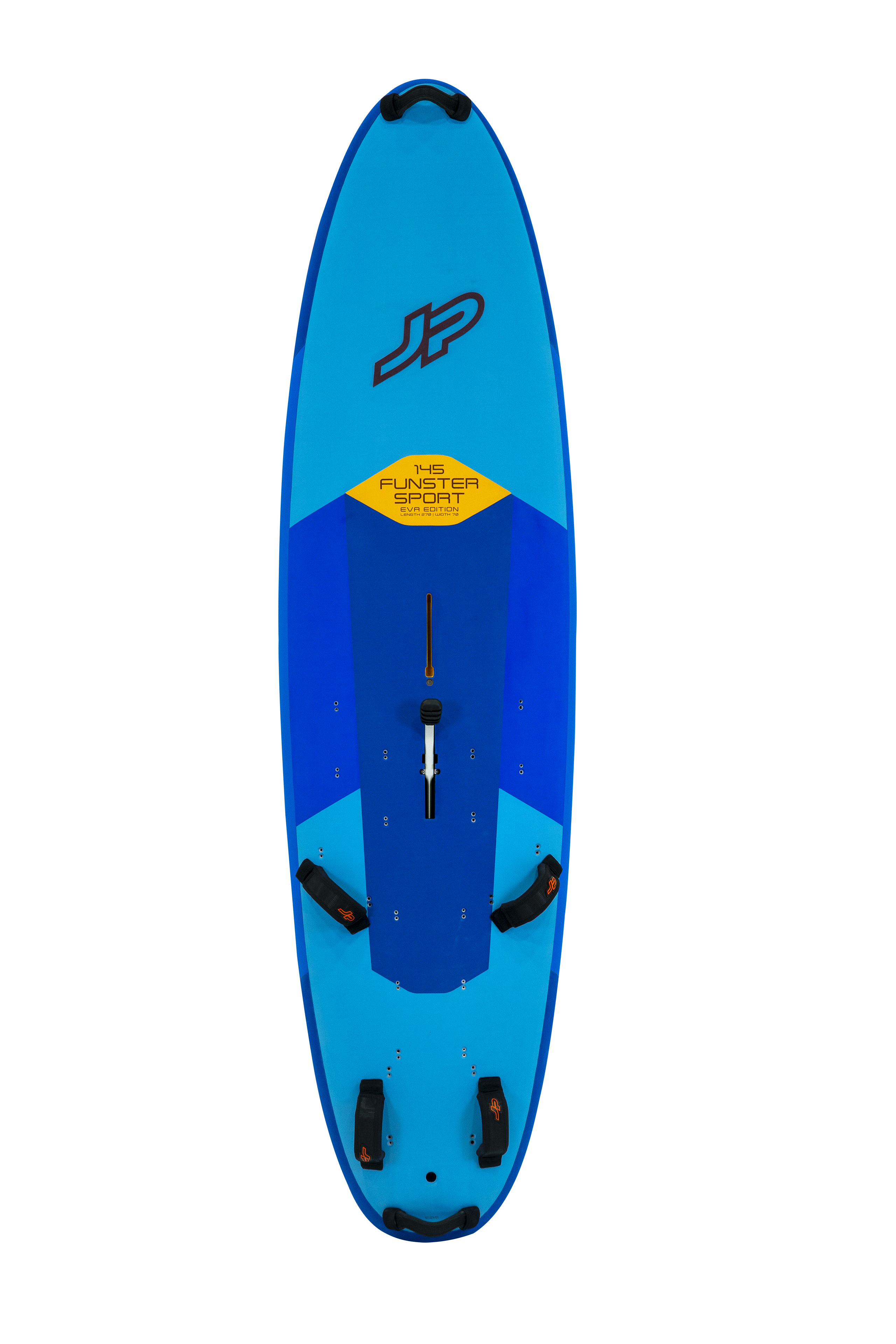
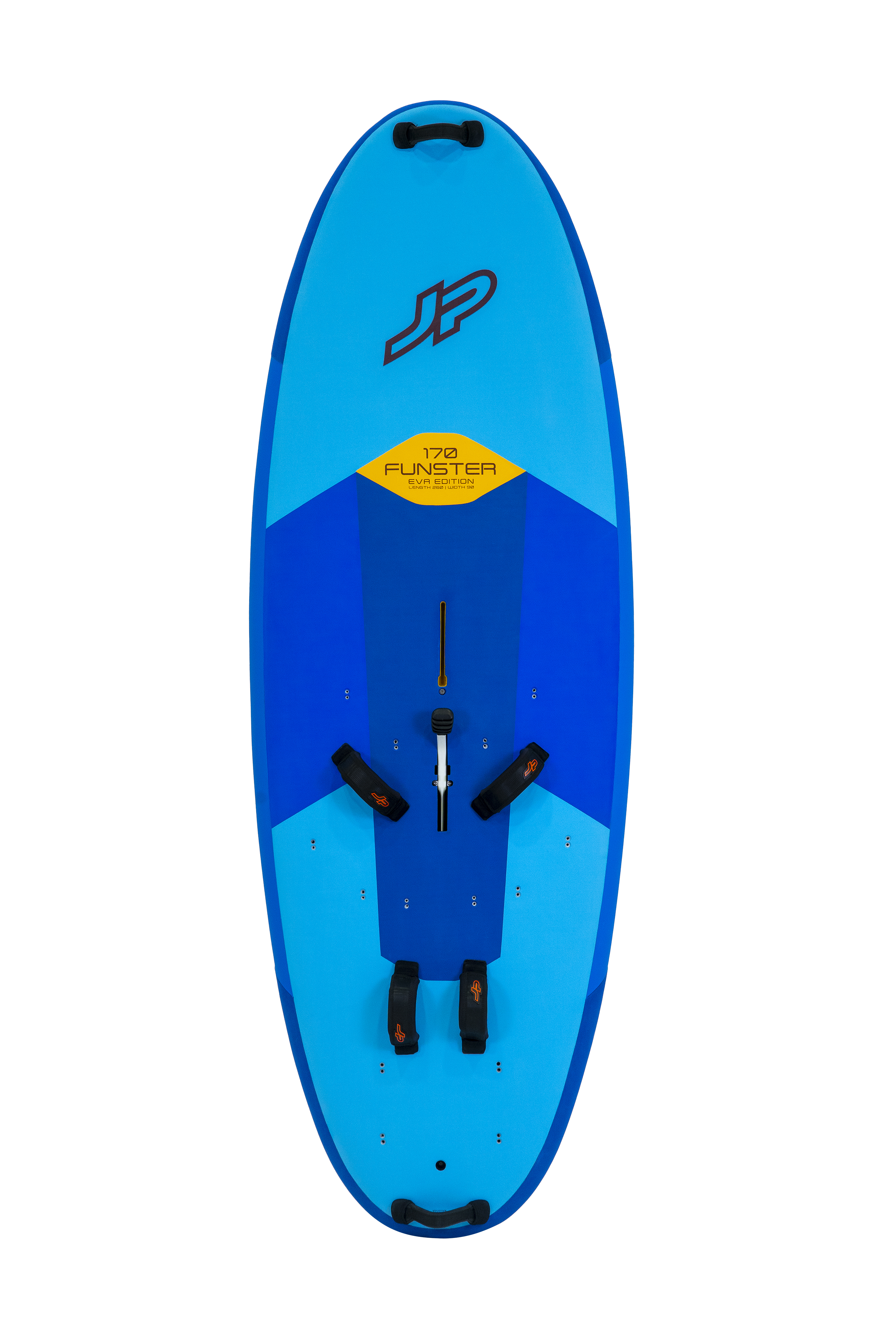
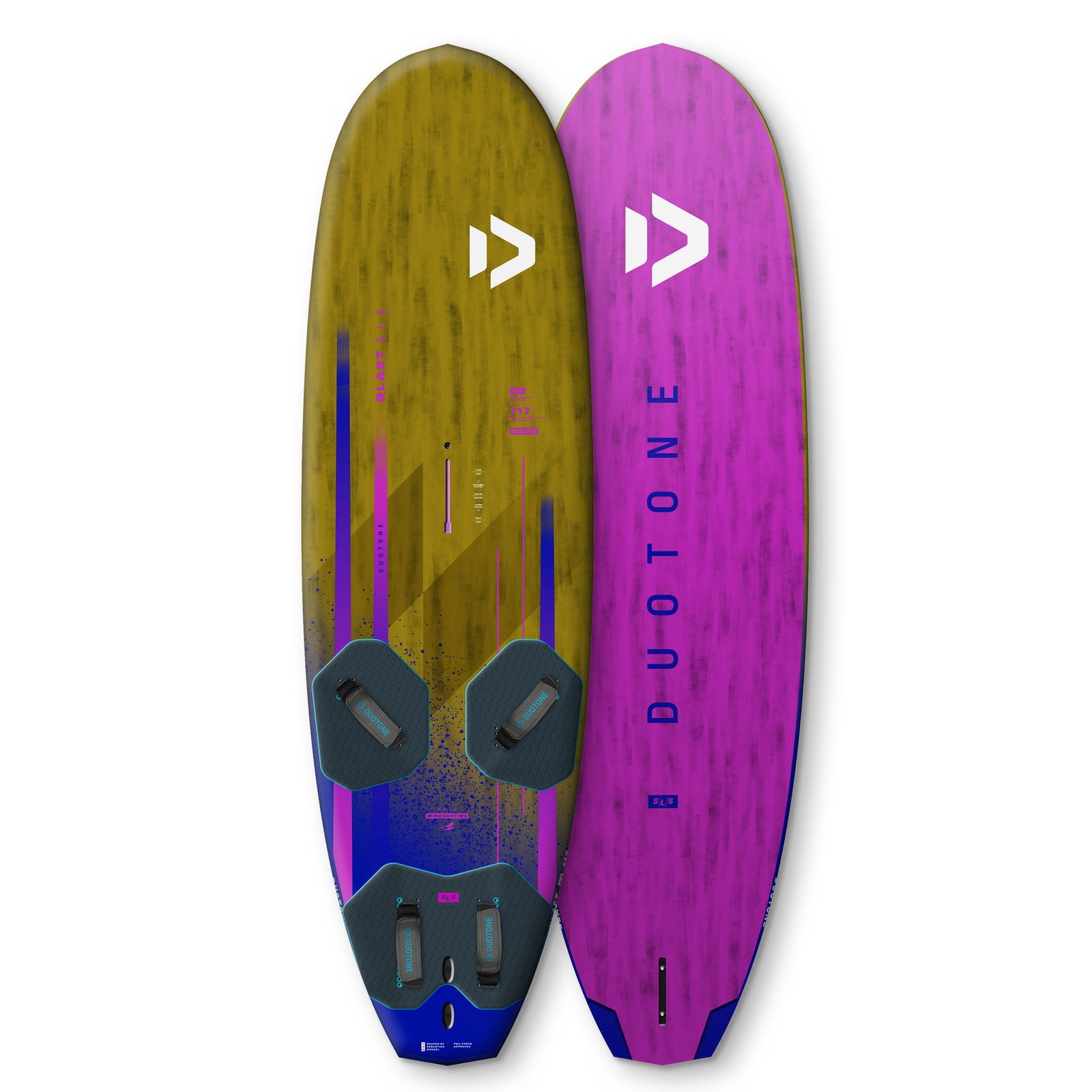
Prices and 2026 specs are pulled live from each product page. Confirm on the product page before checkout.
04 — MistakesThree mistakes we see every week
Ready to level up?
Browse our full windsurf board range and find the right volume for your weight and local conditions.
Frequently asked
140–200 L, depending on your weight. More volume means you float higher, the sail catches wind faster, and the timing window is wider. We recommend the JP Funster EVA 2026 for solid flotation and responsive feel.
Not necessarily. A 5.5 m² sail is plenty if the wind is steady (12–18 knots). In lighter wind, go to 6.5 m². The sail size matters less than consistent wind and your timing.
Most riders nail it within 5–10 sessions of focused practice. The breakthrough usually comes when you stop fighting the sail and trust it to do the lifting. Everyone's timeline is different.
It's harder, but yes. Choppy water makes the board unstable and the timing trickier. Flat water (early morning, protected bays) is ideal for learning. Once you've got it smooth, chop becomes just another variable.