Picking the right kitesurfing harness is not just about style or looks. More than 80 percent of beginners report better comfort and longer sessions with the right support. Think seat harnesses offer the highest performance? Actually, many advanced riders swear by waist harnesses because they unlock next-level tricks that seat harnesses can never handle. The surprising part is your best harness might have nothing to do with your skill but everything to do with how your body moves on the water.
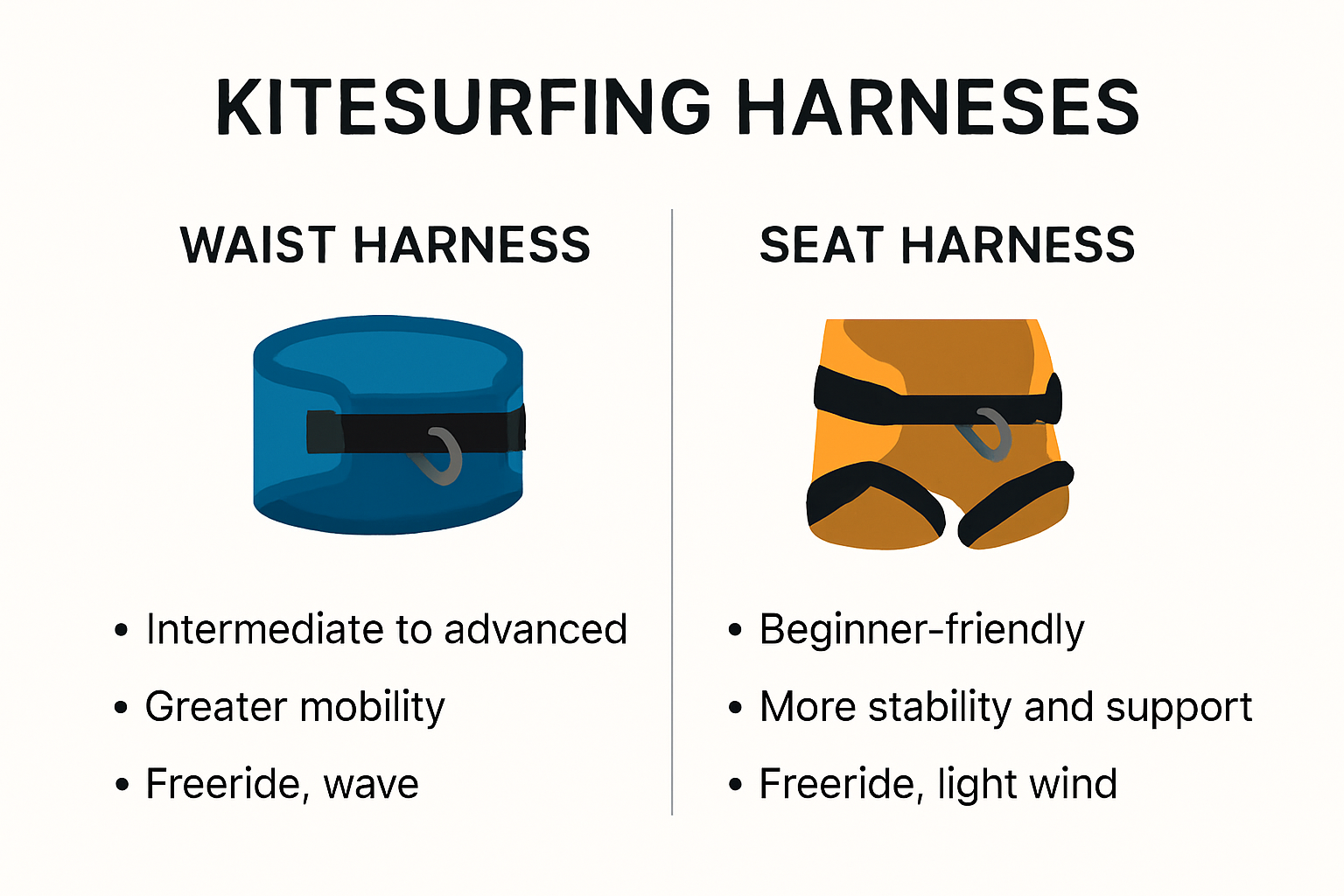
Beginners should consider seat harnesses for support, while advanced riders often prefer waist harnesses for performance and mobility.
Consider Body Mechanics
Your body type, including weight, muscle strength, and flexibility, will influence which harness type suits you best.
Test Harness Fit
Hands-on evaluation is critical; visit specialized stores to try different harnesses and assess fit, load distribution, and comfort.
Prioritize Comfort and Support
A well-fitted harness should feel comfortable and supportive, allowing for a natural range of motion without restriction.
Consult Experts
Seek advice from experienced kitesurfers or professionals to find the best harness type for your specific needs and riding style.
Waist and Seat Harness Types Explained
Kitesurfing harness types play a crucial role in rider comfort, performance, and safety. Understanding the differences between waist and seat harnesses helps you select the right equipment for your specific riding style and body type.
Waist Harnesses: Maximizing Performance And Mobility
Waist harnesses represent the go-to choice for experienced and advanced kitesurfers seeking maximum freedom of movement. These harnesses wrap around the rider’s waist, providing a more athletic and streamlined connection to the kite. Designed with performance in mind, waist harnesses typically feature a slimmer profile that allows for greater flexibility during complex maneuvers.
Pro riders and freestyle enthusiasts often prefer waist harnesses because they enable quick rotations, jumps, and technical tricks. The lower attachment point creates a more direct power transfer from the kite to the rider, which means less energy is lost during high-intensity riding. Lightweight materials and ergonomic designs ensure that riders can maintain comfort without sacrificing performance.
Seat Harnesses: Stability And Comfort For All Skill Levels
Seat harnesses offer a different approach to kitesurfing support, with a design that extends below the waist and provides coverage around the thighs. These harnesses are particularly beneficial for beginners, riders with less core strength, and those who prioritize comfort and stability over extreme mobility.
The broader support structure of seat harnesses distributes the kite’s pulling force more evenly across the rider’s body. This design reduces strain on the lower back and provides additional support during longer sessions. Riders who spend extended time on the water or those learning fundamental techniques will appreciate the added stability and reduced fatigue that seat harnesses deliver.
Choosing the Right Kitesurfing Harness Type
Selecting between waist and seat harness types depends on several key factors. Consider your skill level, riding style, physical fitness, and personal comfort preferences. Beginners might find seat harnesses more forgiving and supportive, while advanced riders typically gravitate towards the performance-oriented waist harnesses.
Body shape also plays a significant role in harness selection. Riders with stronger core muscles and more flexible physiques might excel with waist harnesses, whereas those seeking more comprehensive support will benefit from seat harness designs. Some kitesurfers even maintain multiple harness types for different riding conditions and skill development stages.
When evaluating kitesurfing harness types, pay attention to key features like padding, material quality, adjustment mechanisms, and overall fit. A well-fitted harness can dramatically improve your riding experience, reducing discomfort and allowing you to focus on mastering techniques and enjoying the water.
Ultimately, the best harness is one that feels comfortable, provides adequate support, and matches your individual riding objectives. Test different harness types whenever possible, and don’t hesitate to seek advice from experienced kitesurfers or professional equipment specialists.
Selecting Your Ideal Harness Type
Choosing the right kitesurfing harness type requires a strategic approach that considers multiple factors beyond basic comfort. Your harness selection directly impacts performance, safety, and overall enjoyment on the water.
Understanding Your Riding Profile
Your personal riding profile serves as the foundation for selecting the perfect kitesurfing harness type. Advanced riders typically require different harness characteristics compared to beginners. Consider your skill level, physical fitness, and primary riding objectives when evaluating harness options.
Freestyle and wave riders often prefer waist harnesses due to their lightweight design and enhanced mobility. These harnesses allow quick body movements and facilitate complex aerial maneuvers. Conversely, riders focusing on cruising, learning fundamentals, or participating in longer sessions might find seat harnesses more appropriate.
Physical Considerations And Body Mechanics
Body type and physical characteristics play a significant role in harness selection. Riders with strong core muscles and exceptional flexibility might excel with waist harnesses, which demand more active engagement. Those with less developed core strength or individuals seeking additional lower back support will benefit from seat harness designs.
Consider these key physical factors when selecting your harness:
Body Weight: Heavier riders might require more robust harness construction
Muscle Strength: Core and lower back muscle development impacts harness performance
Flexibility: Range of motion influences harness comfort and maneuverability
Practical Evaluation And Fitting Strategies
Selecting the ideal kitesurfing harness type goes beyond theoretical considerations. Practical evaluation and hands-on testing remain critical to finding your perfect match. Visit specialized watersports stores that offer professional fitting services and allow equipment trials.
When assessing harness fit, pay attention to these crucial elements:
Attachment Point: Ensure the harness connects smoothly with your kite
Load Distribution: Check how weight and kite tension are managed
Adjustment Mechanisms: Verify easy and secure sizing options
Material Comfort: Assess padding and potential chafing areas
Remember that no single harness type works universally for all riders. Experienced kitesurfers often maintain multiple harnesses to accommodate different riding conditions and skill progression. Your ideal harness should feel like a natural extension of your body, providing support without restricting movement.
Consult experienced kitesurfing instructors or professional equipment specialists who can offer personalized recommendations based on your specific needs. They can provide insights into nuanced details that might not be immediately apparent during initial harness selection.
Ultimately, investing time in thorough research and hands-on evaluation will help you discover the kitesurfing harness type that maximizes your performance, comfort, and enjoyment on the water.
Frequently Asked Questions
What is the difference between waist and seat kitesurfing harnesses?
Waist harnesses sit around the waist and are preferred by advanced riders for better mobility and performance, while seat harnesses extend below the waist and offer more stability and comfort, making them ideal for beginners or those who prioritize support.
Which kitesurfing harness is better for beginners?
For beginners, seat harnesses are generally better because they provide greater support and distribute pulling force evenly, reducing strain on the lower back and enhancing overall comfort during longer sessions.
How do I choose the right kitesurfing harness for my body type?
Consider your body weight, muscle strength, and flexibility when choosing a harness. Heavier riders may need more robust materials, while those with stronger core muscles might perform better with a waist harness, and less flexible individuals may benefit from the support of a seat harness.
Is it important to try on kitesurfing harnesses before buying?
Yes, it’s crucial to try on harnesses for proper fit, load distribution, and comfort. Hands-on evaluation helps ensure that the harness feels like a natural extension of your body and allows for a full range of motion without restrictions.
Unlock Your Ultimate Kitesurfing Experience at Surf-Store.com
Choosing the right kitesurfing harness is about more than performance—it’s about comfort, support, and enhancing your overall ride. Whether you’re a beginner looking to ease strain on your lower back with a seat harness or an advanced rider seeking the maneuverability of a waist harness, the right choice can dramatically improve your time on the water. Did you know that over 80% of beginners report longer sessions and greater comfort when equipped with the right gear? Don’t let discomfort hold you back!
!
Dive into the latest selection at Surf-Store.com where our exclusive range features top-tier brands like Duotone, Cabrinha, and ION, specifically curated to match your unique riding style. From kitesurfing to the latest watersport trends, we have everything you need—now is the time to elevate your riding experience! Choose your perfect harness and feel the difference today! Time is of the essence—let’s get you on the water!
Choosing a selection results in a full page refresh.